





カテゴリ
- 学童・教育用品(121)
- 制御機器(3)
- パソコン/周辺機器(1)
絞り込み
ブランド
- SPARKFUN
- モノタロウ(1)
- SMC(108)
- 東京発条製作所(22)
- 高橋産業(4)
- 三菱ふそう(2,441)
- ホンダ(1,074)
- TURN(881)
- メディアカバーマーケット(693)
- RS PRO(660)
- Mitutoyo(ミツトヨ)(626)
- SHIFTUP(シフトアップ)(602)
- piaggio(ピアッジオグループ)(339)
- ミツビシ(310)
- BMW(252)
- ニッサン(225)
- Seeed Studio(218)
- KTM(212)
- DUCATI(192)
- Solventum(ソルベンタム)(旧スリーエム ヘルスケア)(156)
- トヨタ(131)
- ブランドをもっと見る
「TU」の検索結果
特価
 の全商品がキャンペーンコード入力で通常価格より
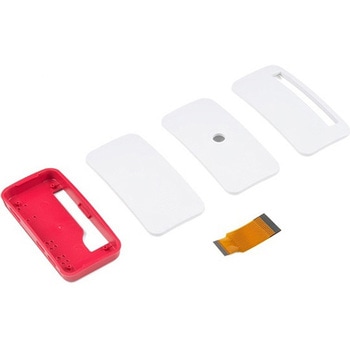 Raspberry Pi Zero CaseSPARKFUN
¥2,298税込¥2,528
1個
当日出荷
DescriptionThe Raspberry Pi Zero Case has been designed to fit both the Pi Zero and the Pi Zero W. These official cases consist of several parts and protect the Raspberry Pi Zero from things like rogue wires that might short it out while still allowing full access to the board. Simply snap the RPi into the bottom half of the enclosure, then snap on a desired top. No tools required!Each case has a standard base featuring a cut-out to allow access to the GPIO, and a choice of three lids:a standard lid, a GPIO lid(allowing access to the GPIO pins from above)and a camera lid(which, when used with the short camera cable supplied, allows the Raspberry Pi camera to be fitted neatly inside it). Additionally, each case includes a 4cm long CSI cable and four rubber feet.Note:This case doesNOTinclude a Raspberry Pi or Camera Module.
アズワン品番67-0425-31
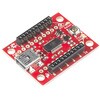
 XBeeExplorerUSBSPARKFUN
¥8,598税込¥9,458
1個
5日以内出荷
XBeeモジュールをパソコンにUSB接続可能にする基板です。USB-シリアル変換LSI、FT231XとXBeeモジュール用の3.3V電源を5VのUSBバスパワーから得るためのレギュレーターICを搭載しています。単純に2.54mmピッチのブレッドボードに搭載可能なピッチ変換基板としても機能しXBeeモジュールのすべてのピンがピンヘッダー実装用のスルーホールに接続されています。(ピンヘッダーは実装されていません。)このボードとminiーUSB接続ケーブル、パソコンがあればX-CTUでのセットアップが可能となりXBeeモジュールを動作させることができます。
アズワン品番63-3153-82
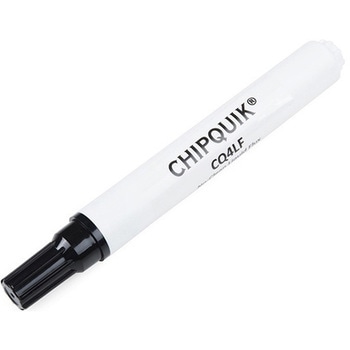 Chip Quik No-Clean Flux Pen - 10mLSPARKFUN
¥3,298税込¥3,628
1個
33日以内出荷
DescriptionDo you need help soldering a difficult project, reworking a botched pin or just making your life easier? This 10mL no-clean flux pen from Chip Quik(R)is great for all of your solder, desolder, rework and reflow purposes! For those of you unfamiliar, flux is a handy substance that prevents beading of the solder and helps the solder flow cleanly onto the parts you are soldering. This is a must-have tool for any hobbyist's workbench.Each of these flux pens can be used in leaded and lead-free applications and is VOC, halide and rosin free --- making it RoHS II and REACH compliant. Since this is a "no-clean" style flux, you won't have to worry about any sort of conductivity issues associated with it interfering with your board or project. However, it is advisable to still clean whatever you are using this flux pen on with basic isopropyl alcohol(IPA), because a clean board is a happy board!Note:It isn't recommended to use this flux with solder that has a water-soluble or rosin flux core in scenarios that require your boards operate at a high reliability rate. At a hobbyist level you should have no issues.FeaturesFlux Type:No-Clean Liquid Flux(for leaded and lead-free applications)Flux Classification:INM0Packaging:10mL PenShelf Life:Refrigerated >24 months; Unrefrigerated >24 months
仕様●RoHS:2022/03/25時点アズワン品番67-0428-26
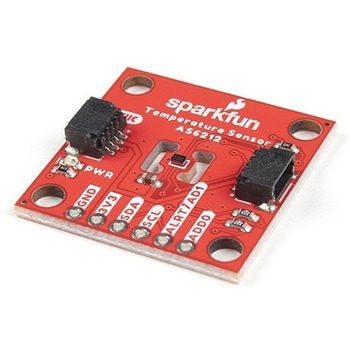 SparkFun Digital Temperature Sensor Breakout - AS6212 QwiicSPARKFUN
¥2,998税込¥3,298
1個
33日以内出荷
DescriptionThis SparkFun Qwiic Digital Temperature Sensor Breakout provides a combination of high temperature accuracy with excellent low power consumption using the AS6212 digital temperature sensor from ams AG. The sensor measures temperature data
アズワン品番67-0427-59
 SparkFun Soil Moisture SensorSPARKFUN
¥1,898税込¥2,088
1個
33日以内出荷
DescriptionThe SparkFun Soil Moisture Sensor is a simple breakout for measuring the moisture in soil and similar materials. The soil moisture sensor is pretty straight forward to use. The two large exposed pads function as probes for the sensor, toge
アズワン品番67-0426-51
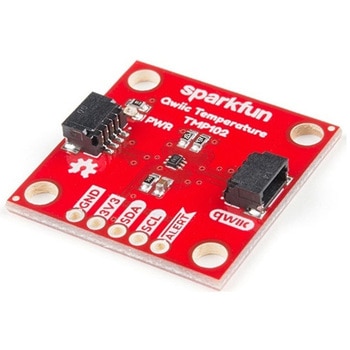 SparkFun Digital Temperature Sensor - TMP102 QwiicSPARKFUN
¥2,298税込¥2,528
1個
33日以内出荷
DescriptionWe all like to know the temperature, right? Well, with the SparkFun TMP102 Digital Temperature Sensor, we've made it just about as easy as it gets. Based on the original Digital Temperature Sensor Breakout TMP102, we've added Qwiic connectors to bring this board into our plug-and-play Qwiic Ecosystem and added an address jumper instead of breaking out the address pin. However, we still have broken out 0.1"-spaced pins in case you prefer to use breadboard.The TMP102 itself is an easy-to-use digital temperature sensor from Texas Instruments. While some temperature sensors use an analog voltage to represent the temperature, the TMP102 uses the I2C bus of the Arduino to communicate the temperature.The TMP102 is capable of reading temperatures to resolution of 0.0625℃, and is accurate up to 0.5℃. The breakout has built-in 4.7kΩ pull-up resistors for I2C communications and runs from 1.4V to 3.6V. I2C communication uses an open drain signaling, so there is no need to use level shifting.The SparkFun Qwiic Connect System is an ecosystem of I2C sensors, actuators, shields and cables that make prototyping faster and less prone to error. All Qwiic-enabled boards use common 1mm pitch, 4-pin JST connector. This reduces the amount of required PCB space, and polarized connections mean you can't hook it up wrong.Get Started with the Qwiic TMP102 Digital Temperature Sensor GuideFeaturesUses the I2C interfaceI2C Address:0x48 by default(Three additional addresses available, as well)12-bit, 0.0625℃ resolutionTypical temperature accuracy of ±0.5℃3.3V sensorSupports up to four TMP102 sensors on the I2C bus at time2x Qwiic Connectors
アズワン品番67-0427-17
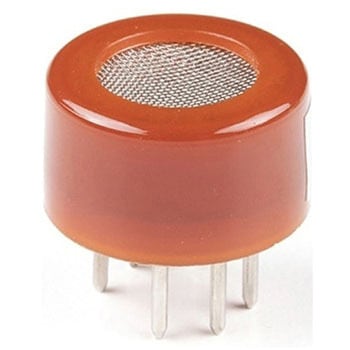 Dual Gas CO and CH4 Detection Sensor - MQ-9BSPARKFUN
¥1,798税込¥1,978
1個
33日以内出荷
DescriptionThe MQ-9B is a CO and CH4 gas detection sensor form Winsen. The sensing material of the MQ-9B is SnO2, which has a low conductivity in clean air. It detects carbon monoxide(1.5V)by method of cycling high and low temperature. The sensor's conductivity gets higher with the CO and CH4 gas concentration rising. The sensing range is 10-500ppm CH4. A simple circuit makes measuring this change in conductivity and turning it into data fairly straight-forward, but does require some calibration.For easy Solderability; use our Gas Sensor Breakout Board.
アズワン品番67-0427-36
 Thermocouple Type-K - Stainless SteelSPARKFUN
¥2,898税込¥3,188
1個
欠品中
DescriptionThis is a stainless steel, Type-K Thermocouple probe. A thermocouple works by taking two wires made of dissimilar metals, connecting them at the two ends, and making a temperature gradient between one end and the other(a 'hot' end and a '
アズワン品番67-0426-58
 SparkFun 6 Degrees of Freedom Breakout - LSM6DSO QwiicSPARKFUN
¥5,198税込¥5,718
1個
欠品中
DescriptionThe SparkFun LSM6DSO 6 Degrees of Freedom Breakout is an accelerometer and gyroscope sensor with a giant 9kB FIFO buffer and embedded processing interrupt functions. Due to the capabilities and low cost of the LSM6DSO we've created this small breakout board just for you! Each LSM6DSO breakout has been designed to be super-flexible and can be configured specifically for many applications. With the LSM6DSO breakout you will be able to detect shocks, tilt, motion, taps, count steps, and even read the temperature!The LSM6DSO from STMicroelectronics is capable of reading accelerometer and gyroscope data up to 6.66kHz for more accurate movement sensing. As stated before this breakout also has the ability to buffer up to 9kB of data between reads, host other sensors, and drive interrupt pins all thanks to the LSM6DSO's built-in FIFO.Utilizing our handy Qwiic system, no soldering is required to connect it to the rest of your system. However, we still have broken out 0.1"-spaced pins in case you prefer to use a breadboard. Each pin has been broken out on the LSM6DSO, with one side of the board featuring power, I2C, and SPI functionality while the other side sporting pins that control auxiliary functionality and interrupt outputs. Please keep in mind that the LSM6DSO is a 3.3V device so supplying voltages greater than ~3.6V can permanently damage the IC. A logic level shifter is required for any development platform operating at 5V.The SparkFun Qwiic Connect System is an ecosystem of I2C sensors, actuators, shields and cables that make prototyping faster and less prone to error. All Qwiic-enabled boards use a common 1mm pitch, 4-pin JST connector. This reduces the amount of required PCB space, and polarized connections mean you can't hook it up wrong.Get Started With the SparkFun LSM6DSO Qwiic 6DoF GuideFeatures2x Qwiic connectorsI2C Address0x6B(default), 0x6AAccelerometer measurement range±2/±4/±8/±16 g full scaleGyro measurement range±125/±250/±500/±1000/±2000 dps full scaleEmbedded temperature sensor16-bit resolutionOperating voltage range1.71V to 3.6VTypically3.3Vif using the Qwiic cablePower consumption @ 1.8V0.55 mA in combo high-performance mode0.265 mA in combo low-power mode"Always on" experience with low power consumption for both accelerometer and gyroscopeI2C/SPI serial interface with main processor data synchronization featureSmart FIFO up to 9 kbyte based on features setOperating temperature range-40℃ to +85℃
アズワン品番67-0427-54
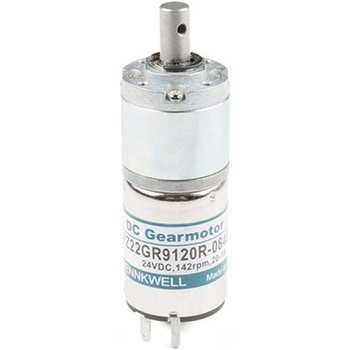 Planetary Gearmotor - 140RPMSPARKFUN
¥2,198税込¥2,418
1個
33日以内出荷
DescriptionThis is a simple ~140RPM(no load), DC planetary gearmotor. This motor is great for various applications such as robotics, electric locks, household automation, and small actuators.The supply voltage range is 6VDC - 24VDC with the polari
アズワン品番67-0426-32
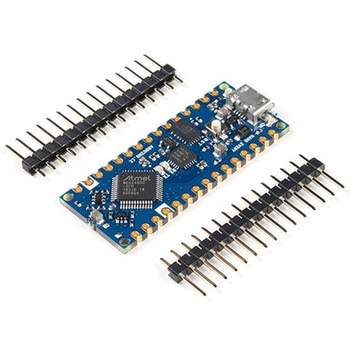 Arduino Nano EverySPARKFUN
¥5,698税込¥6,268
1個
33日以内出荷
DescriptionTurn your ideas into a reality quickly with the new Arduino Nano EveryThis small, robust and powerful board has the same classic Nano footprint loved worldwide. It can be programmed with the easy to use Arduino IDE available offline an
アズワン品番67-0422-87
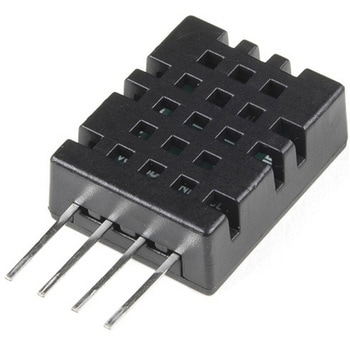 Humidity and Temperature Sensor - DHT20SPARKFUN
¥2,698税込¥2,968
1個
欠品中
DescriptionThe DHT20 is a low cost humidity and temperature sensor with a I2C digital output protocol. It can be applied to HVAC, dehumidifier, automatic control, data loggers, weather stations, and many other projects. The sensor is calibrated and doesn't require extra components so you can get right to measuring relative humidity and temperature.FeaturesSupply Voltage:2.2-5.5VCommunication:Standard I2C ProtocolHumidity from 0-100% RHTypical accuracy:RH:±3%, T:±0.5℃-40 - 80 degrees C temperature range
アズワン品番67-0427-56
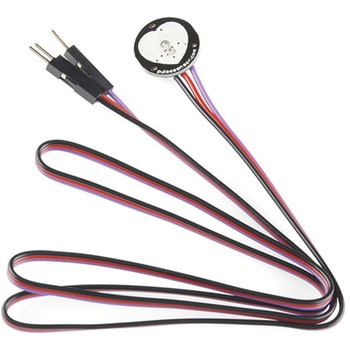 心拍センサーSPARKFUN
¥9,898税込¥10,888
1個
33日以内出荷
DescriptionHeart rate data can be really useful whether you're designing an exercise routine, studying your activity or anxiety levels or just want your shirt to blink with your heart beat. The problem is that heart rate can be difficult to measure. L
アズワン品番67-0437-01
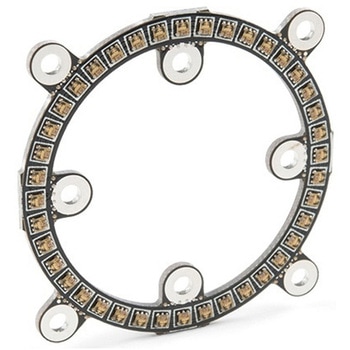 SparkFun LuMini LED Ring - Inch COMシリーズSPARKFUN
¥5,798税込¥6,378
1個
33日以内出荷
DescriptionNote:In larger installations you may need to add a decoupling capacitor between power and ground to prevent voltage dips when turning on a whole bunch of LED's simultaneously. We recommend using a 4.7μF capacitor which we sell in strips of 10.Get Started With the SparkFun LuMini LED Ring GuideFeaturesOptional Capacitor SpaceDaisy-Chainable
アズワン品番67-0421-22
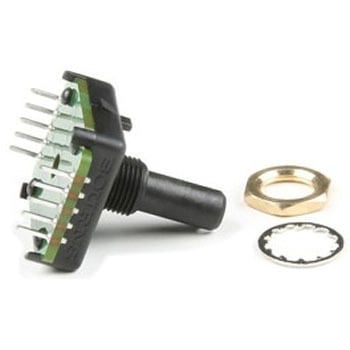 Bourns Absolute Encoder EAW0J-B24-AE0128LSPARKFUN
¥3,500税込¥3,850
1個
33日以内出荷
DescriptionThe Bourns Absolute Encoder is a digital control knob that provides 128 unique results evenly spaced around a full circle. It is designed as a control panel knob but can be adapted for other uses. This can be a good alternative to using a potentiometer and analog pin, as this allows for full-turn and multi-turn operation.It differs from the more common incremental rotary encoder which has only two or four values in a rotation and is designed to measure full rotations and direction. This measuresanglesand absolute position is maintained between power cycles.Features128 rotary positions360 degree continuous rotationRotational life - 50,000 revolutions(min)Max RPM - up to 120Absolute digital output will retain its last position between power cycles or in the event of a power failureThreaded M9x0.75 in. bushing3/4 in. rotating encoder shaftRear mount terminals
アズワン品番67-0421-27
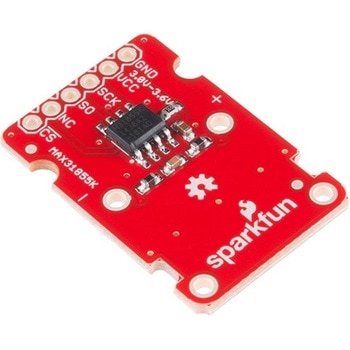 SparkFun Thermocouple Breakout - MAX31855KSPARKFUN
¥6,198税込¥6,818
1個
33日以内出荷
DescriptionThe SparkFun MAX31855K Thermocouple Breakout is a simple 14-bit resolution, SPI-compatible, serial interface thermocouple digitizer that makes reading a wide range of temperatures possible. A thermocouple works by taking two wires made of dissimilar metals, connecting them at the two ends, and making a temperature gradient between one end and the other(a 'hot' end and a 'cold' one). Once this is achieved, a voltage potential is formed and current flows. The SparkFun Thermocouple Breakout takes a standard Type-K thermocouple in one end, digitizes the temperature measured and sends that data out the other end via a SPI interface, thereby interpreting the data and translating it for you to read!With the SparkFun Thermocouple Breakout, the thermocouple's hot junction can be read from -200℃ to +700℃ with an accuracy of ±2℃ while the cold junction, inside the MAX31855K, can only range from -20℃ to +85℃ while maintaining ±2℃ accuracy. The MAX31855K constantly measures the temperature of the cold junction using an internal temperature-sensing diode. The MAX31855K requires a power source from +3.0V to +3.6V(+3.0V nominal)and only draws 1.5mA maximum.The Thermocouple Breakout is designed to accept a standard thermocouple connector, for convenience and compatibility with probes you may already own. These connectors aren't necessary, and you could solder a thermocouple directly into the through-holes labeled '+' and '-'. If you decide to solder the thermocouple directly to the breakout board, it is recommended that the thermocouple be mounted for strain relief to avoid breaking the thin wires. Notches for a zip-tie or wire wrapping have been provided in the PCB opposite the header for this purpose.Features14-bit ResolutionSPI-Compatible, Serial Interface-200℃ to +700℃ Temperature Reading with ±2℃ Accuracy3.0V to 3.6V(+3.0V nominal)RequiredAccepts Type-K Thermocouple
アズワン品番67-0426-49
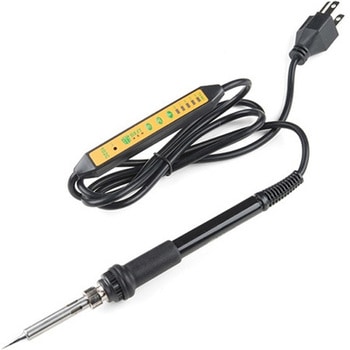 Soldering Iron - 60W Adjustable TemperatureSPARKFUN
¥8,798税込¥9,678
1個
欠品中
DescriptionThis adjustable-temperature soldering iron is a great tool for when you don't want to break the bank but need a reliable iron to get the job done. Operating at 60W and 110V, this soldering iron can be adjusted to five different temperatures
アズワン品番67-0428-24
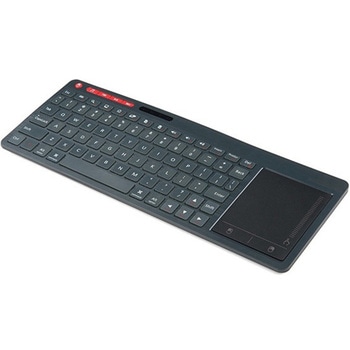 Multimedia Wireless KeyboardSPARKFUN
¥9,998税込¥10,998
1個
33日以内出荷
DescriptionWith Single-Board Computers(SBCs)on the rise, it is a good idea to have an easy way to interface with them. Operating on a 2.4GHz frequency, the Multimedia Wireless Keyboard possesses a normal-sized key layout, media controls and a multitouch track pad. This keyboard is powered by a built-in 850mAh LiPo battery, providing you with 500--700 hours of use. Even if you don't have a Raspberry Pi, BeagleBone or another SBC, this keyboard can work with smart TVs, mobile devices and full-blown PCs!The Multimedia Wireless Keyboard can be charged via the attached USB cable, which stores in the same compartment as the wireless USB receiver. The track pad on the wireless keyboard not only features left and right click options, but also a scroll function. Measuring less than an inch thick, this wireless keyboard is an ideal product for on-the-go situations.Note:The attached USB cable is for charging purposes only.Features317.2mm×123.6mm×18.3mm(12.4in×4.8in×0.7in)System Requirements:HID-Compatible DeviceUSB PortWindows 2000, XP, CE, Vista, 7, 8 or HigherLinux(Debian-3.1, Red Hat-9.0, Ubuntu-8.10, Fedora-7.0)Android OS
アズワン品番67-0429-22
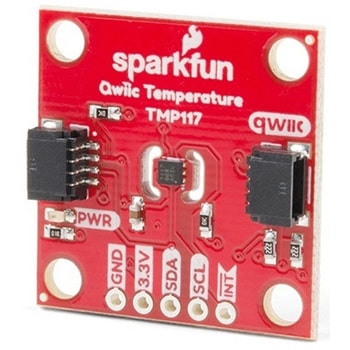 SparkFun High Precision Temperature Sensor - TMP117 QwiicSPARKFUN
¥4,898税込¥5,388
1個
33日以内出荷
DescriptionThe SparkFun Qwiic TMP117 breakout is a high precision temperature sensor equipped with an I2C interface. It outputs temperature readings with high precision of ±0.1℃ across the temperature range of -20℃ to +50℃s with no calibration and a maximum range from -55℃ to 150℃. The SparkFun High Precision Temperature Sensor also has a very low power consumption rate which minimizes the impact of self-heating on measurement accuracy. Utilizing our handy Qwiic system, no soldering is required to connect it to the rest of your system. However, we still have broken out 0.1"-spaced pins in case you prefer to use a breadboard.The SparkFun High Precision Temperature Sensor also includes programmable temperature limits, and digital offset for system correction. While the TMP102 is capable of reading temperatures to a resolution of 0.0625℃ and is accurate up to 0.5℃, the on-board TMP117 is not only more precise but has a 16-bit resolution of 0.0078℃!To make this breakout even easier to use, we've written an Arduino library to help you get started "Qwiic-ly." Check the Documents tab above for more information.The SparkFun Qwiic Connect System is an ecosystem of I2C sensors, actuators, shields and cables that make prototyping faster and less prone to error. All Qwiic-enabled boards use a common 1mm pitch, 4-pin JST connector. This reduces the amount of required PCB space, and polarized connections mean you can't hook it up wrong.The TMP117 High Precision Temperature Sensor can also be automatically detected, scanned, configured, and logged using the OpenLog Artemis datalogger system. No programming, soldering, or setup required!Need a custom board? This component can be found in SparkFun's A La Carte board builder. You can have a custom design fabricated with this component - and your choice of hundreds of other sensors, actuators and wireless devices - delivered to you in just a few weeks.Get Started with the SparkFun High Precision TMP117 Hookup GuideFeaturesUses I2C interface(Qwiic-enabled)Four selectable addresses0x48(default), 0x49, 0x4A, 0x4B16-bit resolution, 0.0078℃High accuracy, digital temperature sensor±0.1℃(max)from ?20℃ to 50℃±0.15℃(max)from ?40℃ to 70℃±0.2℃(max)from ?40℃ to 100℃±0.25℃(max)from ?55℃ to 125℃±0.3℃(max)from ?55℃ to 150℃Operating temperature range-55℃ to +150℃Operating voltage range1.8V to 5.5VTypically 3.3V if using the Qwiic cableLow power consumption3.5μA(1-Hz conversion cycle)150nA(shutdown current)Programmable operating modesContinuous, one-shot, and shutdownProgrammable temperature alert limitsSelectable averaging for reduced noiseDigital offset for system correctionNIST traceabilityDocumentsSchematicEagle FilesBoard DimensionsHookup GuideDatasheet(TMP117)Arduino LibraryGitHub Hardware Repo
アズワン品番67-0427-10
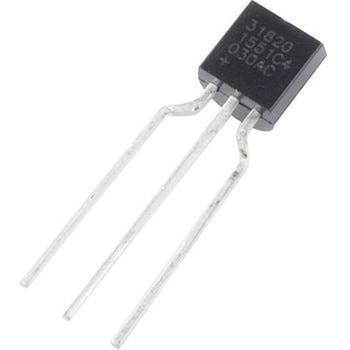 One-Wire Ambient Temperature Sensor - MAX31820SPARKFUN
¥1,598税込¥1,758
1個
33日以内出荷
DescriptionThe MAX31820 ambient temperature sensor provides 9-bit to 12-bit Celsius temperature measurements with ±0.5℃ accuracy over a +10℃ to +45℃ temperature range. Over its entire -55℃ to +125℃ operating range, the device has ±2.0℃ accuracy.The device communicates over a one-wire bus that, by definition, requires only one data line(and ground)for communication with a central microprocessor. In addition, the device can derive power directly from the data line, eliminating the need for an external power supply. Requiring so few pins enables the device to be placed in a 3-pin TO-92 package. The form factor of this package allows the device to be placed above the board and thus measure the ambient temperature of a system, as opposed to the board temperature that a surface-mount package would measure.Each MAX31820 has a unique 64-bit serial code, which allows multiple MAX31820 devices to function on the same one-wire bus. Therefore, it is simple to use one microprocessor to control many devices distributed over a large area.FeaturesUnique one-wire interface requires only one port pin for communicationEach device has a unique 64-bit serial code stored in onboard ROMMultidrop capability simplifies distributed temperature-sensing applicationsRequires no external componentsCan be powered from data line; 3.0V to 3.7V power-supply rangeMeasures temperatures from -55℃ to +125℃±0.5℃ accuracy from +10℃ to +45℃Thermometer resolution is user-selectable from 9 bits to 12 bitsConverts temperature to 12-bit digital word in 750ms(Max)User-definable nonvolatile(NV)alarm settingsAlarm search command identifies and addresses devices whose temperature is outside programmed limits(Temperature Alarm Condition)Available in 3-pin TO-92 packageTO-92 package allows measurement of ambient temperatureSoftware compatible with the DS1822 and DS18B20
アズワン品番67-0426-62
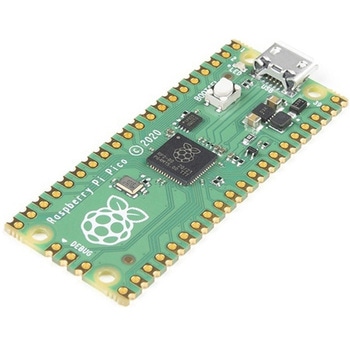 Raspberry Pi PicoSPARKFUN
¥1,798税込¥1,978
1個
33日以内出荷
DescriptionThe Raspberry Pi Pico is a low-cost, high-performance microcontroller board with flexible digital interfaces. It feature the RP2040 which marks Raspberry Pi's first microcontroller designed in-house. Pico provides minimal(yet flexible)exter
アズワン品番67-0423-57
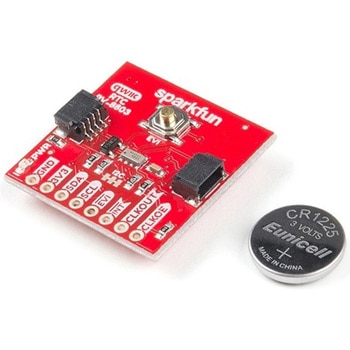 SparkFun Real Time Clock Module - RV-8803 QwiicSPARKFUN
¥5,798税込¥6,378
1個
33日以内出荷
DescriptionThe SparkFun RV-8803 Real Time Clock Module is a Qwiic-enabled breakout board for the RV-8803 RTC. The RV-8803 boasts some impressive features including a temperature compensated crystal providing extremely precise time-keeping, low power consumption, and time stamp event input along with a user-programmable timing offset value. The RV-8803 also has an improved I2C interface compared to the RV-1805 RTC that removes the need to sequence commands/writes to the device. Best of all, the temperature compensation comes factory calibrated. Utilizing our handy Qwiic system so no soldering is required to connect it to the rest of your system. However, we still have broken out 0.1"-spaced pins in case you prefer to use a breadboard.Adding a real-time clock to your project is the perfect way to get more accurate data; timing or otherwise. Using the Qwiic connector makes for a fast, solid way to incorporate this into your project. The RTC module has counters for hundredths of seconds, seconds, minutes, hours, date, month, year and weekday with a number of alarm and interrupt settings available as well. Plus the large operating temperature range(-40 to +105℃)and temperature compensated crystal makes for a good addition for field applications or harsh environments.The SparkFun Qwiic Connect System is an ecosystem of I2C sensors, actuators, shields and cables that make prototyping faster and less prone to error. All Qwiic-enabled boards use a common 1mm pitch, 4-pin JST connector. This reduces the amount of required PCB space, and polarized connections mean you can't hook it up wrong.Get Started with the SparkFun RV-8803 Real Time Clock Module GuideFeaturesFactory Calibrated Temperature CompensationHigh Time Accuracy±1.5 ppm 0 to +50℃±3.0 ppm -40 to +85℃±7.0 ppm +85 to +105℃1.5V to 5.5V Operating Voltage Range240nA @ 3.3v Low-Power ConsumptionI2C Address:0x32Periodic Countdown Timer Interrupt functionPeriodic Time Update Interrupt function(seconds, minutes)Alarm Interrupts for weekday or date, hour and minute settingsExternal Event Input with Interrupt and Time Stamp functionProgrammable Clock Output pin for peripheral devices.Operating temperature range:-40 to +105℃2x Qwiic Connectors
アズワン品番67-0420-10
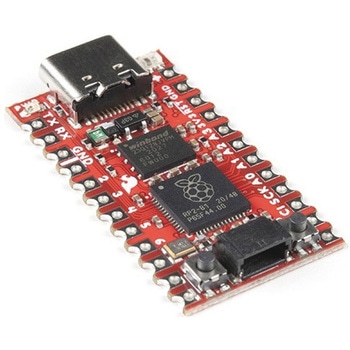 SparkFun Pro Micro - RP2040SPARKFUN
¥4,498税込¥4,948
1個
33日以内出荷
DescriptionThe SparkFun Pro Micro RP2040 is a low-cost, high performance board with flexible digital interfaces featuring the Raspberry Pi Foundation's RP2040 microcontroller. Besides the good 'ol Pro Micro footprint, the board also includes a WS2812B
アズワン品番67-0430-07
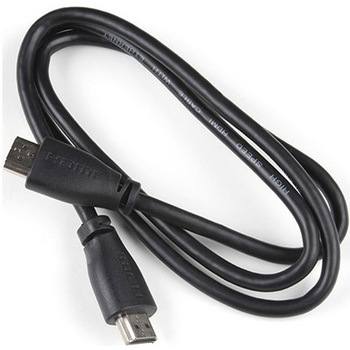 Raspberry Pi Official HDMI Cable CABシリーズSPARKFUN
¥3,500税込¥3,850
1個
欠品中
DescriptionFeaturesBlack Color(If you're looking for the white variation, contact support@sparkfun.com)
アズワン品番67-0420-64
 SparkFun Environmental Sensor Breakout - BME680 QwiicSPARKFUN
¥8,498税込¥9,348
1個
欠品中
DescriptionThe SparkFun BME680 Environmental Sensor is a breakout that combines a gas sensor with temperature, humidity and barometric pressure sensing for a complete environmental sensor in a single package. The gas sensor on the BME680 can detect a
アズワン品番67-0427-22
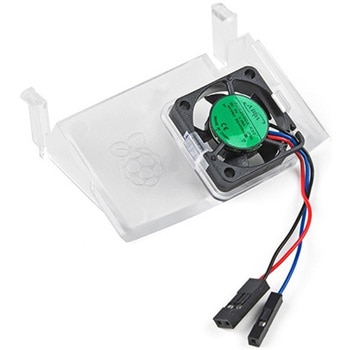 Raspberry Pi 4 Case FanSPARKFUN
¥2,198税込¥2,418
1個
33日以内出荷
DescriptionThe Raspberry Pi 4 Case Fan works with Raspberry Pi 4 and the Raspberry Pi 4 Case. Designed for overclockers and other power users, it keeps your Raspberry Pi 4 at a comfortable operating temperature even under heavy load.The temperatu
アズワン品番67-0426-09
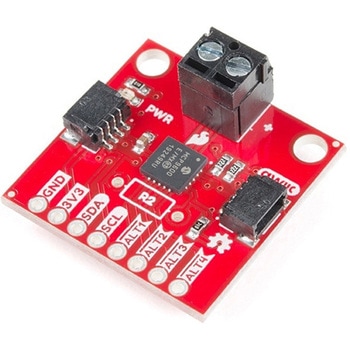 SparkFun Qwiic Thermocouple Amplifier - MCP9600 Screw TerminalsSPARKFUN
¥8,998税込¥9,898
1個
欠品中
DescriptionThe MCP9600 Breakout is a high accuracy Thermocouple Amplifier equipped with an I2C interface, accessed over our Qwiic system. Inside the chip are two temperature sensors, one for the thermocouple itself(the hot junction)and one for the chip itself(the cold junction). As a result, the MCP9600 can read both the ambient temperature and the temperature of whatever you're trying to measure! The MCP9600 can do both with a resolution of 0.0625℃, and an accuracy of ±1.5℃(worst-case). The MCP9600 Thermocouple Amplifier is one of our many Qwiic compatible boards! Simply plug and go. No soldering, no figuring out which is SDA or SCL, and no voltage regulation or translation required!This version of the board comes equipped with screw terminals to allow for your own Thermocouple's wiring to be hooked up with the turn of a screw. This makes it perfect for a variety of applications, from measuring the temperature of your Crock-Pot to making sure your backyard induction furnace is up to temperature.In addition, the MCP9600 has four on-board temperature alerts that you can configure! Instead of constantly polling the sensor over I2C, you can set a temperature limit to trigger an interrupt when the temperature reaches a certain value. This frees up your microcontroller and your I2C bus to do more important things. It's also possible to put the MCP9600 into alternate operation modes in order to save power. The sensor supports a burst mode, where it will take a specified number of samples, return the results, and then go to sleep. This low-power mode makes the MCP9600 perfect for portable applications!We've written an Arduino library to help you get started quickly. You can download the library through the Arduino library manager by searching 'SparkFun MCP9600' or you can get the GitHub repo as a .zip file and install the library from there.The SparkFun Qwiic Connect System is an ecosystem of I2C sensors, actuators, shields and cables that make prototyping faster and less prone to error. All Qwiic-enabled boards use a common 1mm pitch, 4-pin JST connector. This reduces the amount of required PCB space, and polarized connections mean you can't hook it up wrong.Get Started with the Qwiic Thermocouple AmplifierFeaturesTemperature Range of -200℃ to 1350℃Four Onboard Temperature AlertsResolution of 0.0625℃Screw Terminal ConnectorADDR Jumper for variable I2C Addresses(default address of 0x60)2x Qwiic Connectors
アズワン品番67-0427-15
 SparkFun FM Tuner Basic Breakout - Si4703SPARKFUN
¥4,498税込¥4,948
1個
33日以内出荷
仕様●項目1:組込み(完成機能)●項目2:通信、無線(TV、ラジオ等)●項目4:チューナー、フロントエンド●項目5:Si4703アズワン品番67-0452-35
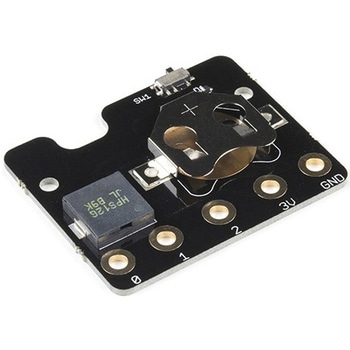 Kitronik MI:power Board V2SPARKFUN
¥2,898税込¥3,188
1個
33日以内出荷
DescriptionThe MI:power board for the BBC micro:bit brings real portability to your wearable projects. The stylish, lightweight PCB is designed to fit snugly against the BBC micro:bit and features a built-in buzzer and 3V coin cell holder. This la
アズワン品番67-0423-58
 Tube - Stainless 1inch OD×8.0inch L×0.88inch IDSPARKFUN
¥2,598税込¥2,858
1個
33日以内出荷
仕様●項目1:金属パイプ●項目2:Tube - Stainless(1inch OD x 8.0inch L x 0.88inch ID)アズワン品番67-0455-20
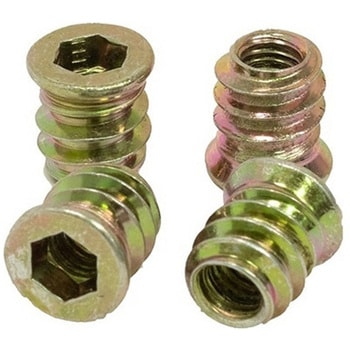 Threaded Inserts Qty 100 - MetricSPARKFUN
¥6,198税込¥6,818
1個
33日以内出荷
DescriptionThese inserts are great for easy and flexible work holding solutions. You could strategically place a few to hold down material in a jig or fixture, or install in a grid pattern to turn your wasteboard into a threaded table by installing t
アズワン品番67-0429-09
 SparkFun Qwiic Haptic Driver - DA7280SPARKFUN
¥3,998税込¥4,398
1個
33日以内出荷
DescriptionThe SparkFun Qwiic Haptic Driver includes an itty-bitty, Linear Resonant Actuator(LRA)vibration motor and Dialog Semiconductor's DA7280 motor driver IC for applications that require haptic feedback.Control the vibration motor with the D
アズワン品番67-0426-41
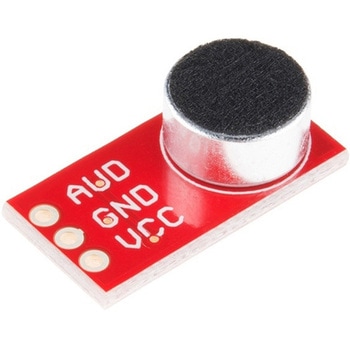 SparkFun Electret Microphone BreakoutSPARKFUN
¥2,898税込¥3,188
1個
欠品中
DescriptionThis small breakout board couples an Electret microphone(100Hz--10kHz)with a 60x mic preamplifier to amplify the sounds of voice, claps, door knocks or any sounds loud enough to be picked up by a microcontroller's analog-to-digital converter. Each breakout comes fully assembled and works from 2.7V up to 5.5V.The Electret Mic Breakout translates amplitude(not volume)by capturing sound waves between two conducting plates(one a vibrating diaphragm and the other fixed)in the microphone and converting them into electrical waves. These electrical signals are then amplified and picked up by your microcontroller's ADC.Get Started With the Electret Microphone Guide!
アズワン品番67-0419-83
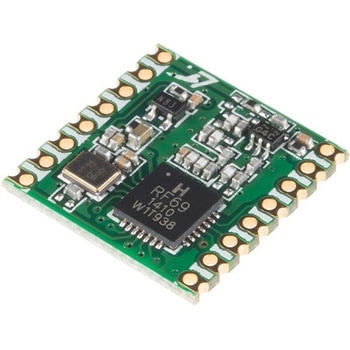 RFM69HCW Wireless Transceiver - COMシリーズSPARKFUN
¥2,798税込¥3,078
1個
欠品中
DescriptionThe RFM69HCW uses an SPI(Serial Peripheral Interface)to communicate with a host microcontroller, and several good Arduino libraries are available. It supports up to 256 networks of 255 nodes per network, features AES encryption to keep your data private, and transmits data packets up to 66 bytes long.Features+20 dBm - 100 mW Power Output CapabilityHigh Sensitivity:down to -120 dBm at 1.2 kbpsHigh Selectivity:16-tap FIR Channel FilterBullet-proof front end:IIP3 = -18 dBm, IIP2 = +35 dBm,80 dB Blocking Immunity, no Image Frequency responseLow current:Rx = 16 mA, 100nA register retentionProgrammable Pout:-18 to +20 dBm in 1dB stepsConstant RF performance over voltage range of moduleFSK Bit rates up to 300 kb/sFully integrated synthesizer with a resolution of 61 HzFSK, GFSK, MSK, GMSK and OOK modulationsBuilt-in Bit Synchronizer performing Clock RecoveryIncoming Sync Word Recognition115 dB+ Dynamic Range RSSIAutomatic RF Sense with ultra-fast AFCPacket engine with CRC-16, AES-128, 66-byte FIFOBuilt-in temperature sensor
アズワン品番67-0420-85
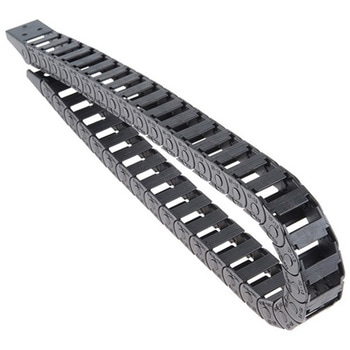 Cable Carrier - 10x15mm 0.5m LengthSPARKFUN
¥4,598税込¥5,058
1個
欠品中
DescriptionNo, this isn't a tank tread, this is a 0.5m long Cable Carrier with 10x15mm bits composing its main body and two screw fasteners at each end for efficient mounting. Sometimes called a "drag chain," each carrier can be used in projects with a large number of moving parts to protect internally installed cables, pipes, or tubes so they can be bent and moved while remaining protected. Cable carriers can most commonly been found in 3D printers and CNC machines but they can be used in any situation where you need cables or tubes to bend without risk of them being damaged or wearing out prematurely.This specific cable carrier offers inner dimensions of 10mm(height)by 15mm(wide), an outer width of 22mm, and a bend radius of 20mm. Additionally, these carriers are thin enough to fit into an Actobotics channel, making custom slide machines or other projects even easier to manage. Much like a chain, individual links can be added or removed to make custom lengths.FeaturesInner Bit Height:10mmInner Bit Width:15mmOuter Bit Height:14Outer Bit Width:22mmMinimum Bend Radius:20mmReinforced Nylon Structure
アズワン品番67-0426-29
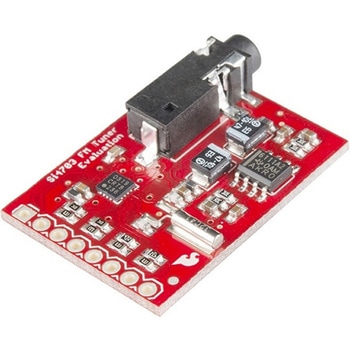 SparkFun FM Tuner Evaluation Board - Si4703SPARKFUN
¥7,298税込¥8,028
1個
33日以内出荷
DescriptionThis is an evaluation board for the Silicon Laboratories Si4703 FM tuner chip. Beyond enabling you to tune in to FM radio stations, the Si4703 is also capable of detecting and processing both Radio Data Service(RDS)and Radio Broadcast Data Service(RBDS)information. The Si4703 even does a very good job of filtering and carrier detection. It also enables data such as the station ID and song name to be displayed to the user.Using this board, you will be able to pick up multiple stations just as well as with a standard FM radio. The board breaks out all major pins and makes it easy to incorporate this great chip into your next radio project. The power bus, the 3.3V and GND pins are broken out For communication. The breakout provides access to SDIO and SCLK for I2C communication while RST can be used for easy resetting. The SEN pin enables the user to change the mode of functionality of the IC. The last two pins broken out are GPIO1 and GPIO2 which can be used as general input/output pins, but also can be used for things like the RDS ready, seeking or tuning functions.Keep in mind, by plugging headphones into the 3.5mm audio jack, you effectively use the cable in your headphones as an antenna! Therefore, this board does not require an external antenna if using headphones or a 3.5mm audio cable longer than 3 feet.
アズワン品番67-0429-34
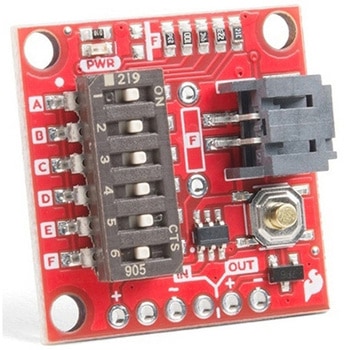 SparkFun Nano Power Timer - TPL5110SPARKFUN
¥2,398税込¥2,638
1個
欠品中
DescriptionSometimes we want our projects on, but sometimes we want to turn them off for a while to save power. The SparkFun Nano Power Timer will run while only consuming minimal power(approximately 35nA)and turn your project on after a set amount of time. When you are done polling your sensors, posting data to the web, writing to your logger, or planning world domination, your microcontroller can tell the Nano Power Timer to turn off the power. No more running your microcontroller all day when you only want to read the ambient temperature once per hour.The TPL5110 delay is configured with the use of resistors. We've added a six-way DIP switch to select one of the five preinstalled resistors. The sixth switch is attached to a pad to add your own PTH(or SMD)resistor. The delays associated with the preinstalled headers are shown on the bottom of the board for quick setup. Additionally, you can select more than one switch to combine the resistors in parallel(up to 26 options not including the custom resistor), check out the hookup guide for a nice chart as to the total resistance and corresponding delay for each combination.The Nano Power Timer can handle voltages between 1.8V and 5.5V as well as current up to 1.1A with times from 100ms to two hours(preconfigured settings range from 30s to 2h). You will find a button on the board which will allow you a quick override to the delay so you can turn your project on whenever you like.Get Started with the SparkFun Nano Power SwitchFeaturesSupply Voltage:1.8V to 5.5VCurrent consumption at 2.5V:35nA Typical(50nA Max)Selectable Time intervals:100ms to 7200s(2 hours)Timer Accuracy:1%
アズワン品番67-0425-68
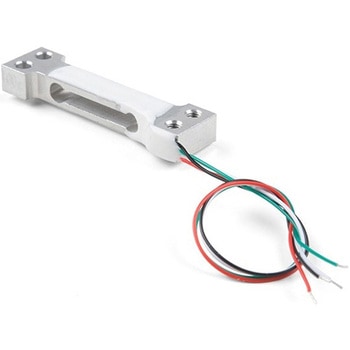 Mini Load Cell - 100g, Straight Bar TAL221SPARKFUN
¥5,198税込¥5,718
1個
欠品中
DescriptionThis miniature straight bar load cell(sometimes called a strain gauge)can translate up to 100g of pressure(force)into an electrical signal. Each load cell is able to measure the electrical resistance that changes in response to, and proportional of, the strain(e.g. pressure or force)applied to the bar. With this gauge you will be able to tell just how heavy an object is, if an object's weight changes over time, or if you simply need to sense the presence of an object by measuring strain or load applied to a surface.Each straight bar load cell is made from an aluminum-alloy and is capable of reading a capacity of 100g. These load cells have four strain gauges that are hooked up in a wheatstone bridge formation. The color code on the wiring is as follows:red = Exc+, green = Sig+, black = Exc-, and white = Sig-. Additionally, these load cells offer an IP65 protection rating and features four M3 sized through-holes for mounting purposes.Get Started with the Load Cell GuideFeaturesCapacity:100gMaterial:Aluminum-AlloyParallel Beam TypeIP65 Rating47mm×12mm×6mm, 110mm Wire
アズワン品番67-0426-82
 LED RGB Strip - Addressable, Sealed, 1m APA104SPARKFUN
¥9,998税込¥10,998
1個
欠品中
DescriptionGone are the days that you have to worry about silicone weather proofing splitting and breaking on you! These are sealed addressable 1 meter long 5V RGB LED strips that come packed with 60 APA104s per meter. Each of these strips are enclosed by a flexible silicon jacket with an IP65 waterproof rating to protect your precious APA104 LEDs. You will be able to control each RGB LED individually giving you the ability to create cool lighting effects for your car, fish tank, or perhaps under cabinet lighting in your kitchen! These LED strips are compatible with similar WS2812 and SK6812 addressable LED's.Note:These come in 1m segments on a reel. They are preterminated with 0.1" spaced 3-pin connectors as well as a 2 wire power connector, as shown in the pictures.FeaturesFlexible LED strip with external control for each LED pixelHigh brightness, full-color and fully addressable(cascade, chasing and scanning)Maximum length of 5 metersExample uses include architectural, landscape, and decorative lighting
アズワン品番67-0421-40
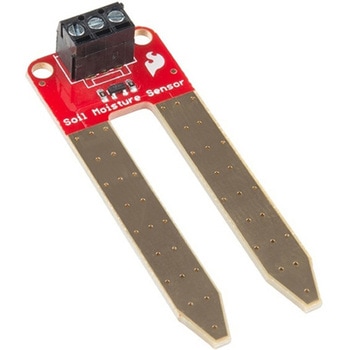 SparkFun Soil Moisture Sensor with Screw TerminalsSPARKFUN
¥2,198税込¥2,418
1個
33日以内出荷
DescriptionThe SparkFun Soil Moisture Sensor is a simple breakout for measuring the moisture in soil and similar materials. The soil moisture sensor is pretty straightforward to use. The two large, exposed pads function as probes for the sensor, together acting as a variable resistor. The more water that is in the soil means the better the conductivity between the pads will be, resulting in a lower resistance and a higher SIG out. This version of the Soil Moisture Sensor includes a 3-pin screw pin terminal pre-soldered to the board for easy wiring and setup.To get the SparkFun Soil Moisture Sensor functioning, all you will need is to connect the VCC and GND pins to your Arduino-based device(or compatible development board). You will receive a SIG out, which will depend on the amount of water in the soil. One commonly known issue with soil moisture senors is their short lifespan when exposed to a moist environment. To combat this, we've had the PCB coated in gold finishing(ENIG, or Electroless Nickel Immersion Gold).Note:Check the Hookup Guide below for assembly and weatherproofing instructions, as well as a simple example project that you can put together yourself!Get Started with the Soil Moisture Sensor Guide
アズワン品番67-0426-56