





カテゴリ
- 学童・教育用品(41)
- 制御機器(2)
絞り込み
ブランド
- SPARKFUN
- 大谷塗料(17)
- AMPHENOL(5)
- BMW(5)
- BULGIN(13)
- EATON(イートン)(15)
- FINDER(8)
- iiyama(イイヤマ)(6)
- MV AGUSTA(17)
- omron(オムロン)(8)
- Radware(6)
- RS PRO(324)
- SKC(環境測定)(19)
- TE Connectivity Japan(旧:TYCOELECTRONICS(タイコエレクトロニクス))(7)
- アーテック[学校教材・教育玩具](12)
- トーエイライト(5)
- ニチベイ(16)
- ハネウェル(7)
- ヨネックス(YONEX)(7)
- ブランドをもっと見る
「vaton」の検索結果
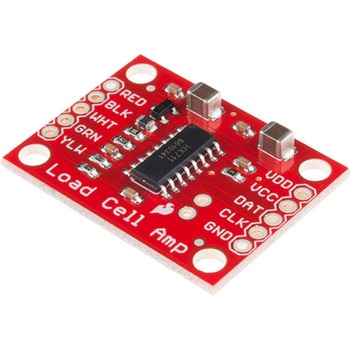
LOAD CELL AMP HX711
SPARKFUN¥3,500税込¥3,8501個33日以内出荷。Description。The SparkFun Load Cell Amplifier is a small breakout board for the HX711 IC that allows you to easily read load cells to measure weight. By connecting the amplifier to your microcontroller you will be able to read the changes in the resistance of the load cell, and with some calibration you'll be able to get very accurate weight measurements. This can be handy for creating your own industrial scale, process control or simple presence detection.。This version of the SparkFun Load Cell Amplifier features a few changes that you specifically asked for! We have separated the analog and digital supply, as well as added a 3.3uH inductor and a 0.1uF filter capacitor for digital supply. Need even more? Checkout the SparkFun Qwiic Scale. It has all the features of the HX711 but with additional library support, a true I2C interface, and no soldering required!。The HX711 uses a two-wire interface(Clock and Data)for communication. Any microcontroller's GPIO pins should work, and numerous libraries have been written, making it easy to read data from the HX711. Check the hookup guide below for more information.。Load cells use a four-wire Wheatstone bridge configuration to connect to the HX711. These are commonly colored RED, BLK, WHT, GRN and YLW. Each color corresponds to the conventional color coding of load cells:Red(Excitation+ or VCC)。Black(Excitation- or GND)。White(Amplifier-, Signal- or Output-)。Green(A+, S+ or O+)。Yellow(Shield)。The YLW pin acts as an optional input that is not hooked up to the strain gauge but is utilized to ground and shield against outside EMI(electromagnetic interference). Please keep in mind that some load cells might have slight variations in color coding.。Note:Special thanks to Bodge for supplying the Library for the HX711!。Get Started with the HX711 Load Cell Amplifier Guide。Features。Operation Voltage:2.7V--5V。Operation Current:< 1.5mA。Selectable 10SPS or 80SPS output data rate。Simultaneous 50 and 60Hz supply rejectionアズワン品番67-0362-17
SparkFun Qwiic SHIM for Raspberry Pi
SPARKFUN¥669税込¥7361個33日以内出荷Description。The SparkFun Qwiic SHIM for Raspberry Pi is a small, easily removable breakout that easily adds a Qwiic connector to your Raspberry Pi. The SHIM design allows you to plug directly to the Pi's I2C bus with no soldering required and the thinアズワン品番67-0422-90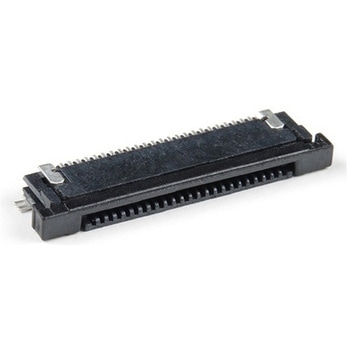
FPC Camera Connector - 24-Pin, 0.5mm Bottom-Contact
SPARKFUN¥369税込¥4061個33日以内出荷Description。Amphenol FCI FFC/FPC Flexible Circuit Connectors are a broad range of innovative connector solutions to terminate FFC/FPC. This 24-Pin FPC connector has a 0.5mm pitch and comes with a bottom contact in a right angle orientation and a surfacアズワン品番67-0421-51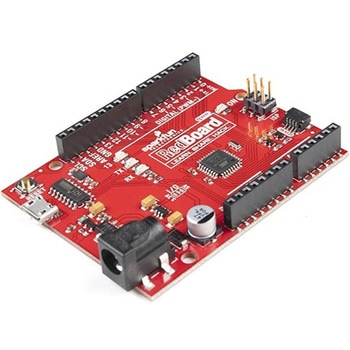
SparkFun RedBoard Qwiic
SPARKFUN¥6,998税込¥7,6981個33日以内出荷Description。At SparkFun we continually like to innovate, update, and improve even when it comes to our very own development boards. We have multiple versions of the SparkFun RedBoard in our catalog but none of them in an R3 form factor with a Qwiic conアズワン品番67-0422-71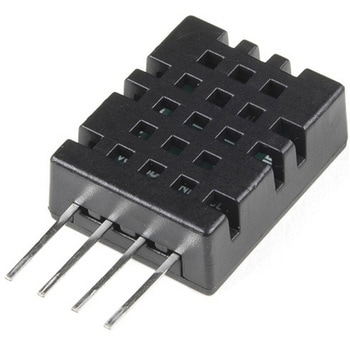
Humidity and Temperature Sensor - DHT20
SPARKFUN¥2,698税込¥2,9681個33日以内出荷Description。The DHT20 is a low cost humidity and temperature sensor with a I2C digital output protocol. It can be applied to HVAC, dehumidifier, automatic control, data loggers, weather stations, and many other projects. The sensor is calibrated and doesn't require extra components so you can get right to measuring relative humidity and temperature.。Features。Supply Voltage:2.2-5.5V。Communication:Standard I2C Protocol。Humidity from 0-100% RH。Typical accuracy:RH:±3%, T:±0.5℃。-40 - 80 degrees C temperature rangeアズワン品番67-0427-56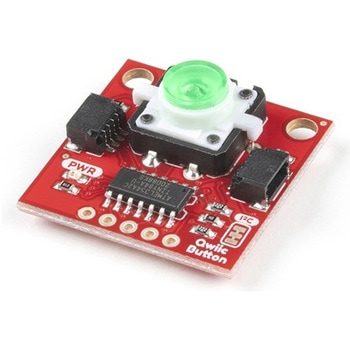
SparkFun Qwiic Button - Green LED
SPARKFUN¥1,698税込¥1,8681個33日以内出荷Description。Buttons are an easy and tactile way to interface with your project, but why would you want to deal with debouncing, polling, and wiring up pull-up resistors? The Qwiic Button with built-in green LED simplifies all of those nasty worries away into an easy to use I2C device! Utilizing our Qwiic Connect System, using the button is as simple as connecting cable and loading up some pre-written code!。If you need multiple buttons for your project, fear not! Each button has configurable I2C address, so you can daisy-chain multiple buttons over Qwiic and still address each one individually. We've got an example in our Arduino library that provides super-easy way to configure your Qwiic Button to whatever I2C address you desire. You can download the library through the Arduino library manager by searching 'SparkFun Qwiic Button' or you can get the GitHub repo as .zip file and install the library from there.。In addition to handling blinking and debouncing, the Qwiic Button has configurable interrupts that can be configured to activate upon button press or click. We've also taken the liberty of implementing FIFO queue onboard the Qwiic Button where it keeps an internal record of when the button was pressed. This means that code on your microcontroller need not waste valuable processing time checking the status of the button but instead can run small function whenever the button is pressed or clicked! For more information on interrupts check out our guide here!。The SparkFun Qwiic Connect System is an ecosystem of I2C sensors, actuators, shields and cables that make prototyping faster and less prone to error. All Qwiic-enabled boards use common 1mm pitch, 4-pin JST connector. This reduces the amount of required PCB space, and polarized connections mean you can't hook it up wrong.。Get Started with the SparkFun Qwiic Button Guide。Features。12mm Green LED Button rated for 50mA。Built in LED can be configured for your desired level of blinkiness!。Each button has configurable I2C address。Configurable interrupts check out our guide here!。FIFO queue。Don't like the color green? Check out the SparkFun Qwiic Button Breakout and add another colored button!。Red LED Tactile Button。Blue LED Tactile Button。Green LED Tactile Button。White LED Tactile Buttonアズワン品番67-0420-14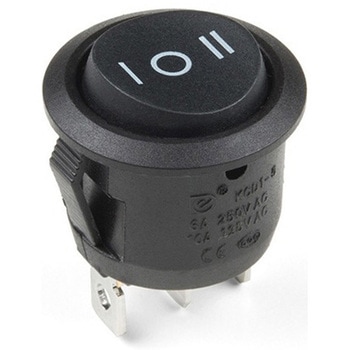
Rocker Switch - On/Off/On Round
SPARKFUN¥399税込¥4391個欠品中Description。This little round on/off/on toggle switch is rated up to 10A at 125VAC and can be panel mounted in a 20mm diameter hole. It'll also look pretty slick in your project!アズワン品番67-0421-26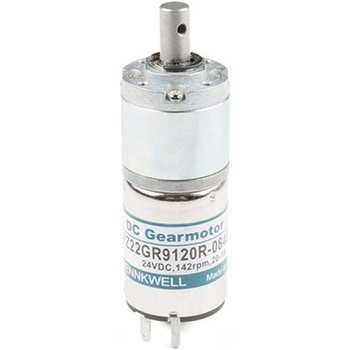
Planetary Gearmotor - 140RPM
SPARKFUN¥2,198税込¥2,4181個33日以内出荷Description。This is a simple ~140RPM(no load), DC planetary gearmotor. This motor is great for various applications such as robotics, electric locks, household automation, and small actuators.。The supply voltage range is 6VDC - 24VDC with the polariアズワン品番67-0426-32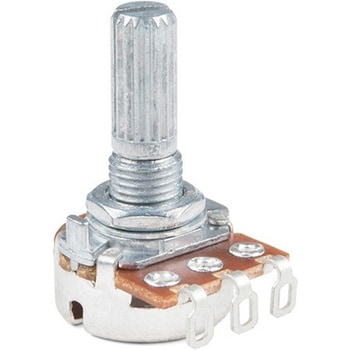
Rotary Potentiometer - 100k Ohm, Linear Panel Mount
SPARKFUN¥1,098税込¥1,2081個33日以内出荷Description。An adjustable potentiometer can open up many interesting user interfaces. With this rotary potentiometer just turn the dial and the resistance changes. This potentiometer from Bourns has a 1/4" metal knurled shaft diameter, solder lug terminals, no detents, and has a 100K linear taper.。Connect VCC to an outer pin, GND to the other, and the center pin will have a voltage that varies from 0 to VCC depending on the rotation of the pot. Hook the center pin to an ADC on a microcontroller and get a variable input from the user!アズワン品番67-0421-09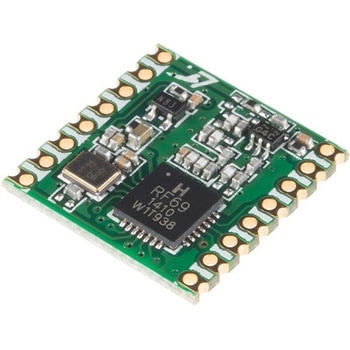
RFM69HCW Wireless Transceiver - COMシリーズ
SPARKFUN¥2,798税込¥3,0781個33日以内出荷Description。The RFM69HCW uses an SPI(Serial Peripheral Interface)to communicate with a host microcontroller, and several good Arduino libraries are available. It supports up to 256 networks of 255 nodes per network, features AES encryption to keep your data private, and transmits data packets up to 66 bytes long.。Features。+20 dBm - 100 mW Power Output Capability。High Sensitivity:down to -120 dBm at 1.2 kbps。High Selectivity:16-tap FIR Channel Filter。Bullet-proof front end:IIP3 = -18 dBm, IIP2 = +35 dBm,80 dB Blocking Immunity, no Image Frequency response。Low current:Rx = 16 mA, 100nA register retention。Programmable Pout:-18 to +20 dBm in 1dB steps。Constant RF performance over voltage range of module。FSK Bit rates up to 300 kb/s。Fully integrated synthesizer with a resolution of 61 Hz。FSK, GFSK, MSK, GMSK and OOK modulations。Built-in Bit Synchronizer performing Clock Recovery。Incoming Sync Word Recognition。115 dB+ Dynamic Range RSSI。Automatic RF Sense with ultra-fast AFC。Packet engine with CRC-16, AES-128, 66-byte FIFO。Built-in temperature sensorアズワン品番67-0420-85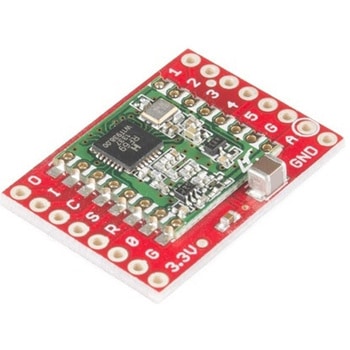
SparkFun RFM69 Breakout 434MHz
SPARKFUN¥4,398税込¥4,8381個33日以内出荷Description。This is the SparkFun RFM69 Breakout, a small piece of tech that breaks out all the pins available on the RFM69HCW module as well as making the transceiver easy to use. The RFM69HCW is an inexpensive and versatile radio module that operates in the unlicensed ISM(Industry, Science and Medicine)radio band. It's perfect for building inexpensive short-range wireless networks of sensors and actuators for home automation, citizen science and more.。This RFM69HCW operates on the 434MHz frequency and is capable of transmitting at up to 100mW and up to 300kbps, but you can change both of those values to fit your application. For example, you can maximize range by increasing the transmit power and reducing the data rate, or you can reduce both for short-range sensor networks that sip battery power. At full power and with simple wire antennas, we can get messages from one side of a large office building to the other through numerous internal walls. In open air you can reach 500 meters or more. With more complex antennas and modulation schemes, similar parts have successfully transmitted from space to the ground(by very smart amateur radio enthusiasts; your mileage may vary)!。The RFM69HCW uses an SPI(Serial Peripheral Interface)to communicate with a host microcontroller, and several good Arduino libraries are available. It supports up to 256 networks of 255 nodes per network, features AES encryption to keep your data private, and transmits data packets up to 66 bytes long.。SparkFun sells two versions of the RFM69HCW:a 915MHz version and this 434MHz version. Although the ISM band is license-free, the band itself is different in different areas. Very roughly, 915MHz is for use in the Americas, and the 434MHz version is for use in Europe, Asia and Africa. Check your local regulations for other areas.。Get Started with the RFM69HCW Hookup Guide。Features。Transmit power:-18dBm(0.016mW)to +20dBm(100mW)in 1dBm steps。Receive sensitivity:down to -120dBm at 1.2kbps。Modulation types:FSK GFSK MSK GMSK OOK。Bit rates(FSK):1.2kbps to 300kbps。Voltage range:1.8V to 3.6V。Current consumption:0.1uA sleep, 1.25mA standby, 16mA receive, 130mA transmit(max)。Encryption:AES 128-bit(optional)。Packet buffer(FIFO):66 bytes。0.8"×1.1"アズワン品番67-0429-33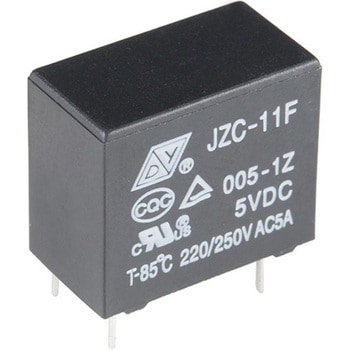
Relay SPDT Sealed
SPARKFUN¥969税込¥1,0661個33日以内出荷。These are high quality Single Pole - Double Throw(SPDT)sealed relays. Use them to switch high voltage、and/or high current devices.。This relay's coil is rated up to 12V、with a minimum switching voltage of 5V. The contacts are rated up to 5A(@250VAC、30VDC).。Note。In the Datasheet below there is a pin layout listed as "Bottom View." Be aware、this pin layout is actually the top-down view NOT bottom-up.アズワン品番67-0452-51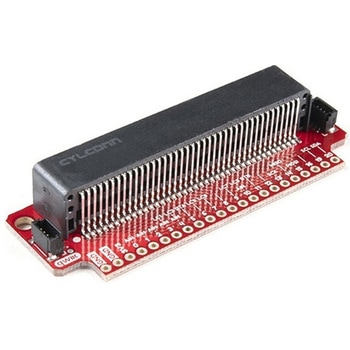
SparkFun Qwiic micro:bit Breakout
SPARKFUN¥1,898税込¥2,0881個33日以内出荷Description。The SparkFun Qwiic micro:bit Breakout is a board that connects to the BBC micro:bit and expands the capabilities of the development platform by providing access to more pins and allowing for connections to the I2C and SPI buses. This breakout board for the micro:bit's edge connector allows intermediate and advanced users to connect the micro:bit to breadboards and other Qwiic sensors, motors, LEDs and more.。The micro:bit on its own has three digital/analog input/output rings available for you to use initially with alligator clips. With the micro:bit Breakout we have broken out all 21 GPIO, power and ground-to-pin outs in a 0.1" formation and with two individual Qwiic Connectors. With this breakout you will be able to unlock the full potential of your micro:bit!。Note:。No micro:bit or headers are included with this breakout; they will need to be purchased separately. If you would like a micro:bit breakout with headers already soldered on, be sure to check out this board's sibling.。The SparkFun Qwiic Connect System is an ecosystem of I2C sensors, actuators, shields and cables that make prototyping faster and less prone to error. All Qwiic-enabled boards use a common 1mm pitch, 4-pin JST connector. This reduces the amount of required PCB space, and polarized connections mean you can't hook it up wrong.。Get Started with the Qwiic micro:bit Breakout Guideアズワン品番67-0420-12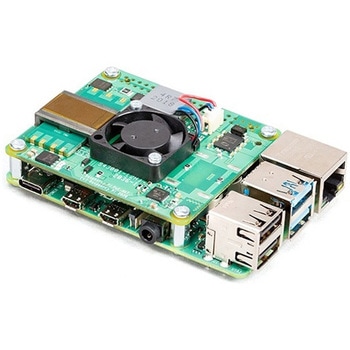
Raspberry Pi PoE+ HAT
SPARKFUN¥12,980税込¥14,2781個33日以内出荷Description。The Raspberry Pi PoE+ HAT is designed to replace the existing Raspberry Pi PoE HAT in all new and existing designs. Like the original, the PoE+ HAT allows you to power your Raspberry Pi using Power over Ethernet networks. The PoE+ HAT meets all the requirements of the IEEE 802.3af(802.3at Type 1, PoE+)specifications. This ups the power the network can supply from 15.4 watts(PoE)to 25.5 Watts(PoE+)over CAT5 cable.。No modification to the main Raspberry Pi board is needed for the PoE+ HAT to work but you will need to ensure that your Pi's software is up to date for all functionality to be available. The Raspberry Pi PoE+ HAT is fitted with a small fan that is controlled by the Raspberry Pi via I2C and will turn on and off automatically depending on the temperature of the main processor on your Pi.。Note:There is no Raspberry Pi included with this product. Your desired Pi will need to be purchased separately.。Features。Input voltage:37-57V DC, Class 2 device。Output power:5V DC/3.0A。Cooling:25mm×25mm brushless fan delivering 2.2CFM forprocessor cooling。Fully isolated switch-mode power supply。Fan control。Mechanically compatible with the existing Raspberry Pi PoE HATアズワン品番67-0423-62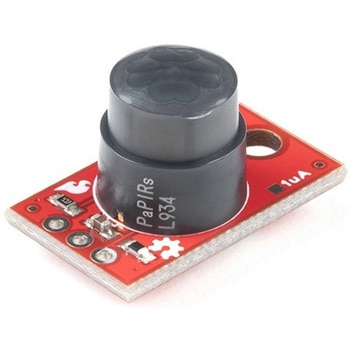
SparkFun PIR Breakout - 170uA EKMC4607112K
SPARKFUN¥5,498税込¥6,0481個33日以内出荷。Description。Passive Infrared(PIR)sensors are great for detecting motion in a small area around the sensor. The 170μA SparkFun EKMC4607112K PIR Breakout is a simple board equipped with an EKM-series PIR sensor from Panasonic(R). The EKM-series PIR sensors are optimized for small movements to offer motion-sensing options for continuously powered applications.。PIR sensors do not return specific distance data but instead monitor for IR light coming from objects in their field of view and will activate their signal when motion is detected in their sensing area, making them perfect for applications such as turning devices on automatically when motion is detected. Applications include home and building automation for energy saving, automated on/off lighting control, security, appliances, and IoT.。Panasonic's low-profile PIR motion sensors(10.9mm versus standard 14.4mm height offer space savings for constrained designs)consist of a lens to create various detection zones, an optical filter to block non-infrared light, pyroelectric sensing elements, electromagnetic shielding to all circuitry, and an impedance converter to get an electrical signal. This PIR sensor offers digital output across 32 zones at 5m detection distance with 90°×90° detection area.。Note:The sensitivity of passive infrared sensors is influenced by environmental conditions, so a performance evaluation test under representative conditions is recommended.。Get Started with the SparkFun PIR Breakout Guide。Features。Operating Voltage:2.3。-。4.0V。170 μA。standby current consumption。Lens diameter - 10.4mm。Lens Height - 10.9mm。5m detection distance。90°×90°(±45°)detection areaアズワン品番67-0427-43
SparkFun gator:log - micro:bit Accessory Board
SPARKFUN¥4,398税込¥4,8381個33日以内出荷Description。The gator:log is the perfect data logging tool for your next experiment. With the automation of the data collection process, gone are the days of rushing around with a pen and composition notebook to simultaneously record data and your observations. Now, you only need to sit back and observe your experiment.。The gator:log allows a student(s)to focus more on what is happening in the experiment than watching a thermometer or sensor readout. Additionally, a micro:bit can still be used to provide a graphical display for observing changes in data, when a sensor readout is required. If tied in conjunction with the gator:RTC, stop watches on time based experiments can become a thing of the past too(with the added benefit of more accurate timing results)!。The micro:bit is a pocket-sized computer that lets you get creative with digital technology. Between the micro:bit and our shield-like bit boards you can do almost anything while coding, customizing and controlling your micro:bit from almost anywhere! You can use your micro:bit for all sorts of unique creations, from robots to musical instruments and more. At half the size of a credit card, this versatile board has vast potential!。Get Started with the SparkFun gator:log Hookup Guide。Features。ATmega328P microcontroller。μSD(micro SD)card slot for μSD card for data storage。Two status indicator LEDs。Serial connection via RX and TX pads。GND and 3V3 pads for 3.3V power connectionアズワン品番67-0422-76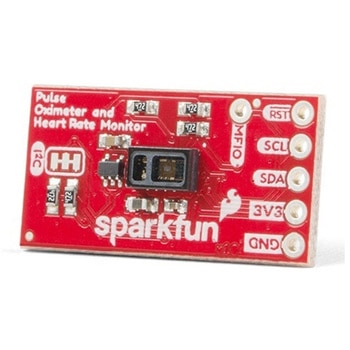
SparkFun Pulse Oximeter and Heart Rate Sensor - MAX30101 & MAX32664 Qwiic
SPARKFUN¥13,980税込¥15,3781個33日以内出荷Description。The SparkFun Pulse Oximeter and Heart Rate Sensor is an I2C based biometric sensor, utilizing two chips from Maxim Integrated:the MAX32664 Biometric Sensor Hub and the MAX30101 Pulse Oximetry and Heart Rate Module. While the latter does all the sensing, the former is an incredibly small and fast Cortex M4 processor that handles all of the algorithmic calculations, digital filtering, pressure/position compensation, advanced R-wave detection, and automatic gain control. We've provided a Qwiic connector to easily connect to the I2C data lines but you will also need to connect to two additional lines. This board is very small, measuring at 1in×0.5in(25.4mm×12.7mm), which means it will fit nicely on your finger without all the bulk.。The MAX30101 does all the sensing by utilizing its internal LEDs to bounce light off the arteries and arterioles in your finger's subcutaneous layer and sensing how much light is absorbed with its photodetectors. This is known as photoplethysmography. This data is passed onto and analyzed by the MAX32664 which applies its algorithms to determine heart rate and blood oxygen saturation(SpO2). SpO2 results are reported as the percentage of hemoglobin that is saturated with oxygen. It also provides useful information such as the sensor's confidence in its reporting as well as a handy finger detection data point. To get the most out of the sensor we've written an Arduino Library to make it easy to adjust all the possible configurations.。The SparkFun Qwiic connect system is an ecosystem of I2C sensors, actuators, shields and cables that make prototyping faster and less prone to error. All Qwiic-enabled boards use a common 1mm pitch, 4-pin JST connector. This reduces the amount of required PCB space, and polarized connections mean you can't hook it up wrong.。Get Started with the Pulse Oximeter and Heart Rate Monitor Hookup Guide。Features。SparkFun Pulse Oximeter and Heart Rate Sensor。MAX30101 and MAX32664 sensor and sensor hub。Qwiic connectors for power and I2C interface。I2C Address:0x55。MAX30101 - Pulse Oximeter and Heart-Rate Sensor。Heart-Rate Monitor and Pulse Oximeter Sensor in LED Reflective Solution。Integrated Cover Glass for Optimal, Robust Performance。Ultra-Low Power Operation for Mobile Devices。Fast Data Output Capability。Robust Motion Artifact Resilience。MAX32664 - Ultra-Low Power Biometric Sensor Hub。Biometric Sensor Hub Solution。Finger-Based Algorithms Measure Pulse Heart Rate and Pulse Blood Oxygenation Saturation(SpO2)。Both Raw and processed data are available。Basic Peripheral mix optimizes size and performanceアズワン品番67-0426-96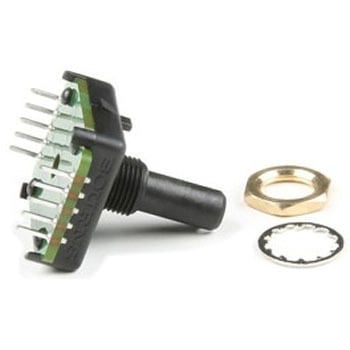
Bourns Absolute Encoder EAW0J-B24-AE0128L
SPARKFUN¥3,500税込¥3,8501個33日以内出荷。Description。The Bourns Absolute Encoder is a digital control knob that provides 128 unique results evenly spaced around a full circle. It is designed as a control panel knob but can be adapted for other uses. This can be a good alternative to using a potentiometer and analog pin, as this allows for full-turn and multi-turn operation.。It differs from the more common incremental rotary encoder which has only two or four values in a rotation and is designed to measure full rotations and direction. This measures。angles。and absolute position is maintained between power cycles.。Features。128 rotary positions。360 degree continuous rotation。Rotational life - 50,000 revolutions(min)。Max RPM - up to 120。Absolute digital output will retain its last position between power cycles or in the event of a power failure。Threaded M9x0.75 in. bushing。3/4 in. rotating encoder shaft。Rear mount terminalsアズワン品番67-0421-27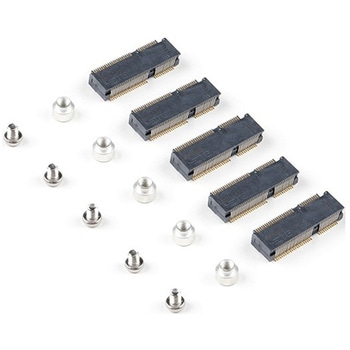
SparkFun MicroMod DIY Carrier Kit 5 pack
SPARKFUN¥2,398税込¥2,6381個33日以内出荷Description。The great thing about open source is that while SparkFun has designed our own MicroMod carrier boards, that does not stop you from creating your very own MicroMod carrier board. The MicroMod DIY Carrier Kit includes five M.2 connectors(4.2mm height), screws, and standoffs so that you can get all the special parts you may need to make your own carrier board.。MicroMod uses the common M.2 connector. This is the same connector found on modern motherboards and laptops. There are various locations for the plastic 'key' on the M.2 connector to prevent a user from inserting an incompatible device. The MicroMod standard uses the 'E' key and further modifies the M.2 standard by moving the mounting screw 4mm to the side. The 'E' key is fairly common so a user could insert a M.2 compatible Wifi module but because the screw mount doesn't align, the user would not be able to secure an incompatible device into a MicroMod carrier board.。MicroMod is a modular interface ecosystem that connects a microcontroller "processor board" to various "carrier board" peripherals. Utilizing the M.2 standard, the MicroMod standard is designed to easily swap out processors on the fly. Pair a specialized carrier board for the project you need with your choice of compatible processor!アズワン品番67-0424-52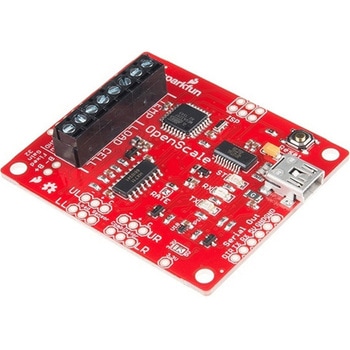
SparkFun OpenScale
SPARKFUN¥11,980税込¥13,1781個33日以内出荷Description。The SparkFun OpenScale is a simple-to-use, open source solution for measuring weight and temperature. It has the ability to read multiple types of load cells and offers a simple-to-use serial menu to configure calibration value, sample rate, time stamp and units of precision.。Simply attach a four-wire or five-wire load cell of any capacity, plug the OpenScale into a USB port, open a terminal window at 9,600bps, and you'll immediately see mass readings. The SparkFun OpenScale will enable you to turn a load cell or four load sensors in a Wheatstone bridge configuration into the DIY weigh scale for your application.。The OpenScale was designed for projects and applications where the load was static(like the beehive in front of SparkFun HQ)or where constant readings are needed without user intervention(for example, on a conveyor belt system). A load cell with an equipped OpenScale can remain in place for months without needing user interaction!。On board the SparkFun OpenScale is the ATmega328P microcontroller, for addressing your communications needs and transferring your data to a serial terminal or to a data logger such as the OpenLog, an FT231 with mini USB, for USB to serial connection; the HX711, a 24-bit ADC for weigh scales; and the TMP102, for recording the ambient temperature of your system. The OpenScale communicates at a TTL level of 9,600bps 8-N-1 by default and possesses a baud rate configurable from 1,200bps to 1,000,000bps.。Get Started with the OpenScale Guide。Features。Operating Voltage:5V。Operating Ampage:80-100mA。Power Cycling above 500ms。Selectable 10SPS or 80SPS Output Data Rate。Local External Temperature Sensors。Fixed Adjustable Gainアズワン品番67-0426-48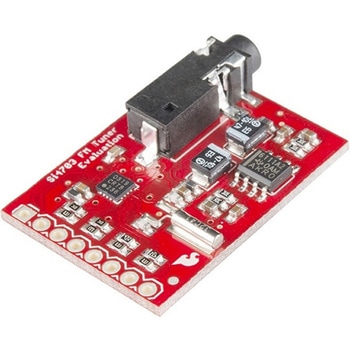
SparkFun FM Tuner Evaluation Board - Si4703
SPARKFUN¥7,298税込¥8,0281個33日以内出荷Description。This is an evaluation board for the Silicon Laboratories Si4703 FM tuner chip. Beyond enabling you to tune in to FM radio stations, the Si4703 is also capable of detecting and processing both Radio Data Service(RDS)and Radio Broadcast Data Service(RBDS)information. The Si4703 even does a very good job of filtering and carrier detection. It also enables data such as the station ID and song name to be displayed to the user.。Using this board, you will be able to pick up multiple stations just as well as with a standard FM radio. The board breaks out all major pins and makes it easy to incorporate this great chip into your next radio project. The power bus, the 3.3V and GND pins are broken out For communication. The breakout provides access to SDIO and SCLK for I2C communication while RST can be used for easy resetting. The SEN pin enables the user to change the mode of functionality of the IC. The last two pins broken out are GPIO1 and GPIO2 which can be used as general input/output pins, but also can be used for things like the RDS ready, seeking or tuning functions.。Keep in mind, by plugging headphones into the 3.5mm audio jack, you effectively use the cable in your headphones as an antenna! Therefore, this board does not require an external antenna if using headphones or a 3.5mm audio cable longer than 3 feet.アズワン品番67-0429-34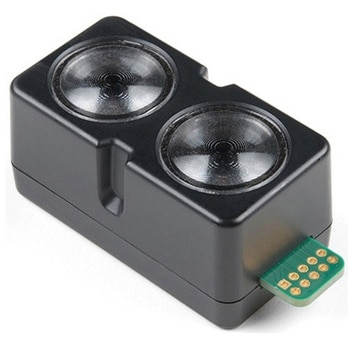
Garmin LIDAR-Lite v4 LED - Distance Measurement Sensor
SPARKFUN¥22,980税込¥25,2781個33日以内出荷Description。The LIDAR-Lite v4 LED sensor is the next step in the LIDAR-Lite line. A small, lightweight, low-power optical ranging sensor. It's the first to incorporate ANT profile wireless networking technology into an optical sensor. Its built-in nRF52840 processor means that developers can create custom applications, or be operated as a stand-alone device right out of the box by using the preloaded stock application.。Like the LIDAR-Lite v3 and LIDAR-Lite v3HP sensors; it can also be directly connected to an external micro-controller running a custom user application. As such, it provides a highly adaptable option for OEM and maker applications in robotics, Internet of Things, and unmanned vehicles ― or any application where an ultrasonic sensor might otherwise be used. It's perfect as the basic building block for applications where wireless capabilities, small size, light weight, low power consumption and high performance are important factors in a short-range, 10-meter, optical distance measuring sensor.。The LIDAR-Lite v4 requires an external 5VDC power source and soldering is required. This Time-of-Flight ranging module uses a LED and optics for ranging. It does not use a laser; therefore, it is inherently eye-safe under normal usage.。Features。Resolution:1 cm。Measurement repeatability:As measured indoors to a 90% reflective target。1 cm is equivalent to 1 standard deviation。Using "high accuracy" mode, with averaging:+/- 1 cm to 2 meters。+/- 2 cm to 4 meters。+/- 5 cm to 10 meters。Range:5 cm to 10 meters(as measured from back of unit)。Update rate:I2C = >200 Hz typical。ANT(R)= up to 200 Hz to a 90% target indoors at 2m in normal operating mode。Interface:I2C or ANT; user configurable for SPI using the Nordic SDK。Power(operating voltage):4.75 - 5.25 VDC。Current consumption:2mA idle, 85mA during acquisition。Operating temperature:-20 to 60° C。LED wavelength:940 nm。Beam divergence:4.77°。Optical aperture:14.9 mm。Unit size(HxWxD):2.1"×0.8"×0.9"(52.2×21.2×24.0 mm)。Weight:14.6 g(0.5 oz)アズワン品番67-0427-09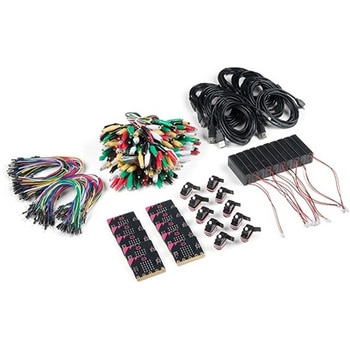
SparkFun Educator Lab Pack for micro:bit v2
SPARKFUN¥109,800税込¥120,7801個33日以内出荷Description。The micro:bit v2 Educator's Lab Pack includes 10 micro:bit v2 boards and everything you need to get you started with the new learning platform. The Lab Pack has everything you need, including micro:bits, cables, battery packs and a few parts to experiment with. This package provides an easy way to introduce your students to the micro:bit without any difficulty or parts hunting.。SparkFun packages everything educators need to get started with the micro:bit in a variety of classroom settings and learning environments. The hardware boards, cables and extra parts come pre-packaged. Examples and curriculum materials are available from SparkFun and micro:bit, as well as from other educators involved in this growing maker education movement.。Lab Packs are your classroom entry point. By combining our kits, popular boards and other educational tools with support materials(to be updated), SparkFun brings all the power of the open source community to the classroom. We've also updated the battery pack to be closer to what is in other micro:bit kits. It now requires 2xAAA batteries.。The micro:bit is a pocket-sized computer that lets you get creative with digital technology. Between the micro:bit and our shield-like bit boards you can do almost anything while coding, customizing and controlling your micro:bit from almost anywhere! You can use your micro:bit for all sorts of unique creations, from robots to musical instruments and more. At half the size of a credit card, this versatile board has vast potential!。。Features。Micro:bit 2.0:64 MHz Arm Cortex-M4 with FPU。512KB Flash。128KB RAM。5x5 Red LED Array。Two Programmable Buttons, one touch sensitive logo。MEMS microphone and LED indicator。Onboard Light, Compass, Accelerometer, Temp Sensors and Speaker。2.4 Ghz Micro:bit Radio/BLE 5.0 Smart Antenna。25-pin Edge Connector。4 dedicated GPIO, PWM, i2c, SPI, and ext. power。Three Digital/Analog Input/Output Rings。Two Power Rings --- 3V and GND。Dedcated I2C bus for peripherals。MicroUSB Connector(5V)。JST-PH Battery Connector(。Not。JST-XH)(3V)。Power/reset Button with Status LED。200 mA available for accessories。Program with C++, MakeCode, Python, Scratchアズワン品番67-0424-92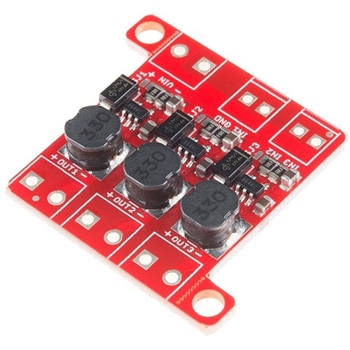
PicoBuck LED Driver
SPARKFUN¥5,298税込¥5,8281個33日以内出荷Description。The PicoBuck LED Driver is an economical and easy to use driver that will allow you to control and blend three different LEDs on three different channels. By default, each channel is driven at 330mA; that current can be reduced by either presenting an analog voltage or a PWM signal to the board. Version 12 of the board adds a solderable jumper that can be closed to increase the maximum current to 660mA. The new voltage regulator also increased the voltage rating on the various components on the board, allowing it to be used up to the full 36V rating of the AL8805 part.。Three signal inputs are provided for dimming control. You can use the PWM signal from an Arduino or your favorite microcontroller to dim each channel individually, or you can tie them all to the same PWM for simultaneous dimming. Dimming can be done by an analog voltage(20%-100% of max current by varying voltage from .5V-2.5V)or by PWM(so long as PWM minimum voltage is less than .4V and maximum voltage is more than 2.4V)for a full 0-100% range. A small jumper is provided for each channel to allow you to increase the drive strength from 330mA to 660mA. Two mounting holes for 4-40 or M3 screws are provided on either side of the board. They are perforated so they can be easily snapped off with a pair of pliers, if a smaller footprint is desired.。Note:。If you're going to use screw terminals, this board uses two different sizes. Check the related products for both sizes you'll need.。Note:。The PicoBuck LED Driver was made in collaboration with Ethan Zonca. A portion of each sale is given back to him.アズワン品番67-0420-83
SparkFun Thing Plus - XBee3 Micro U.FL
SPARKFUN¥16,980税込¥18,6781個33日以内出荷Description。The XBee3 Thing Plus is an ultra capable and easy way for getting into wireless device development. The combination of XBee and Qwiic in a space conscious design represents a much needed update to our XBee offering. With 20 I/O pins and Lithium Polymer Ion battery management, the XBee3 Thing Plus has all the basics for quickly prototyping or developing a connected device such as a remote sensor. The Qwiic connector and JST connector for the battery make for a solder-less option when working with the board which shortens setup time.。The new XBee3 Micro Module provides the classic all-but plug and play 802.15.4 2.4GHz wireless connection(Zigbee 3.0 Protocol)that makes it so desirable, but with a new addition of being programmable with MicroPython(32KB of memory available for it). RF data rates up to 250 Kbps and 200ft indoor ranges and up to 4000ft line-of-sight outdoor range. Communicating with/Configuring the module happens via an AT Command set or the Digi API, X-CTU, both locally or over-the-air. There's even a mobile version of X-CTU now; Digi XBee(R)Mobile.。This variation features a U.FL antenna connector for longer range communications. Check out the related products for compatible antennas.。Get Started With the SparkFun XBee3 Thing Plus Guide。Features。XBee3 Micro Module。Silicon Labs EFR32MG SoC。250Kbps RF, 1Mbps Serial data rates。Indoor/Urban range up to 200 ft(60 m)。Outdoor/RF Line of Sight range up to 4000 ft(1200 m)。+8 dBm transmit power。-103 dBm receiver sensitivity。UART, I2C, SPI Interfaces(SPI currently not available at this time, but broken out on the board)。ISM 2.4GHz Frequency Band(802.15.4)。1MB of memory, 128KB RAM(32KB available for MicroPython)。20 GPIO Pins。Configurable via X-CTU or AT Command set via both USB and Wirelessly(second XBee 3 device required for wireless configuration unless you're using the mobile app)。Qwiic Compatible。On-board charging circuit and connector for 3.3v Lithium Polymer Ion Batteries(see related products for compatible batteries)。2.6VDC - 3.6VDC supply voltage。U.FL Antenna Connectorアズワン品番67-0429-55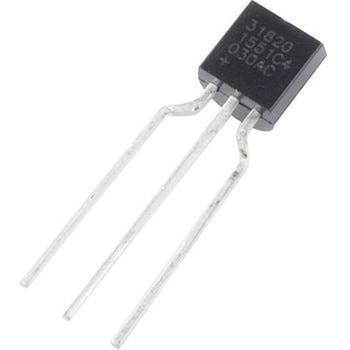
One-Wire Ambient Temperature Sensor - MAX31820
SPARKFUN¥1,598税込¥1,7581個33日以内出荷。Description。The MAX31820 ambient temperature sensor provides 9-bit to 12-bit Celsius temperature measurements with ±0.5℃ accuracy over a +10℃ to +45℃ temperature range. Over its entire -55℃ to +125℃ operating range, the device has ±2.0℃ accuracy.。The device communicates over a one-wire bus that, by definition, requires only one data line(and ground)for communication with a central microprocessor. In addition, the device can derive power directly from the data line, eliminating the need for an external power supply. Requiring so few pins enables the device to be placed in a 3-pin TO-92 package. The form factor of this package allows the device to be placed above the board and thus measure the ambient temperature of a system, as opposed to the board temperature that a surface-mount package would measure.。Each MAX31820 has a unique 64-bit serial code, which allows multiple MAX31820 devices to function on the same one-wire bus. Therefore, it is simple to use one microprocessor to control many devices distributed over a large area.。Features。Unique one-wire interface requires only one port pin for communication。Each device has a unique 64-bit serial code stored in onboard ROM。Multidrop capability simplifies distributed temperature-sensing applications。Requires no external components。Can be powered from data line; 3.0V to 3.7V power-supply range。Measures temperatures from -55℃ to +125℃。±0.5℃ accuracy from +10℃ to +45℃。Thermometer resolution is user-selectable from 9 bits to 12 bits。Converts temperature to 12-bit digital word in 750ms(Max)。User-definable nonvolatile(NV)alarm settings。Alarm search command identifies and addresses devices whose temperature is outside programmed limits(Temperature Alarm Condition)。Available in 3-pin TO-92 package。TO-92 package allows measurement of ambient temperature。Software compatible with the DS1822 and DS18B20アズワン品番67-0426-62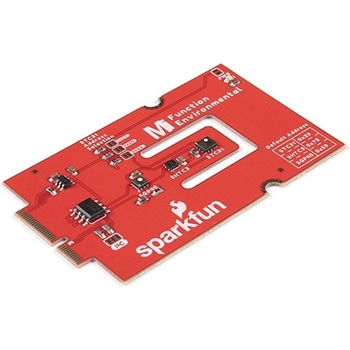
SparkFun MicroMod Environmental Function Board
SPARKFUN¥44,980税込¥49,4781個33日以内出荷Description。The SparkFun MicroMod Environmental Function Board adds additional sensing options to the MicroMod Processor Boards. This Function Board includes three sensors to monitor air quality(SGP40), humidity temperature(SHTC3), and CO2 concentrations(STC31)in your indoor environment. To make it even easier to use, all communication is over the MicroMod's I2C bus!。The SGP40 measures the quality of the air in your room or house. The SGP40 uses a metal oxide(MOx)sensor with a temperature controlled micro hotplate and provides a humidity-compensated volatile organic compound(VOC)based indoor air quality signal. Both the sensing element and VOC Algorithm feature an unmatched robustness against contaminating gases present in real world applications enabling a unique long term stability as well as low drift and device to device variation.。The SHTC3 is a highly accurate digital humidity and temperature sensor. The SHTC3 uses a capacitive humidity sensor with a relative humidity measurement range of 0 to 100% RH and bandgap temperature sensor with a temperature measurement range of -40℃ to 125℃. The SHTC3 builds on the success of their SHTC1 sensor with higher accuracy(±2% RH, ±0.2℃)than its predecessor, enabling greater flexibility.。The STC31 measures CO2 concentrations based on thermal conductivity and has two CO2 measurement ranges:0 to 25 vol%; and 0 to 100 vol%. The measurement repeatability is 0.2 vol%, with a stability of 0.025 vol% / ℃. The measurement accuracy depends on the measurement range:0.5 vol% + 3% measured value; 1 vol% + 3% measured value. Using measurements from the SHTC3, the STC31 is able to provide humidity-compensated measurements together with improved temperature compensation. The STC31 can compensate for atmospheric pressure too - which is handy if, like us, you're up in the mountains!。The outstanding performance of these three sensors is based on Sensirion's patented CMOSens(R)technology, which combines the sensor element, signal processing, and digital calibration on a small CMOS chip. The well-proven CMOS technology is perfectly suited for high-quality mass production and is the ideal choice for demanding and cost-sensitive OEM applications.。Utilizing our handy M.2 MicroMod connector, no soldering is required to connect it to your system. Simply match up the key on your processor and function board's beveled edge connector to their respective key on the M.2 connector, then secure them to the main board with screws. The MicroMod Environmental Function Board can then be read via the I2C port. The board is equipped with the AP2112 3.3V voltage regulator, I2C pull-up resistors, power LED, jumper to disable the LED, and jumpers for alternative STC31 addresses.。Note:A MicroMod Processor and Main Board are not included with this MicroMod Environmental Function Board. These boards will need to be purchased separately.。MicroMod is a modular interface ecosystem that connects a microcontroller "processor board" to various "carrier board" peripherals. Utilizing the M.2 standard, the MicroMod standard is designed to easily swap out processors and function boards on the fly. Pair a specialized carrier board for the project you need with your choice of compatible processor!。Get Started with the MicroMod Environmental Function Board。Features。Input voltage range。2.5V to 6.0V。Typ.。5V。via Main Board's USB connector。Typ.。~3.7V to 4.2V。via Main Board's LiPo battery Connector。I/O voltage。3.3V。AP2112 3.3V voltage regulator(rated 600mA)。Power LED。I2C pull-up resistors。Sensirion SGP40 Air Quality Sensor。Uses I2C interface。Address:0x59(default)。Operating voltage range。1.7V to 3.6V(Typ.。3.3V。)。Operating temperature range。-20℃ to +55℃。Typical current consumption。2.6mA。during continuous operation(at 3.3V)。34μA。when idle(heater off)。Output signal。Digital raw value(SRAW):0 - 65535 ticks。Digital processed value(VOC Index):0 - 500 VOC index points。Switch-on behavior。Time until reliably detecting VOC events:<60s。Time until specifications are met:<1h。Recommended sampling interval。VOC Index:1s。SRAW:0.5s - 10s(Typ. 1s)。Sensirion SHTC3 Humidity and Temperature Sensor。Uses I2C interface。Address:0x70(default, non-configurable)。Operating voltage range。1.62V - 3.6V(Typ.。3.3V。)。Operating temperature range。-40℃ to +125 ℃。Relative Humidity。Measurement range:0% to 100%。Typical accuracy:±2 %RH。Resolution:0.01 %RH。Temperature。Measurement range:-40℃ to +125 ℃。Typical accuracy:±0.2 ℃。Resolution:0.01 ℃。Typical current consumption(varies based on mode)。4.9μA to 430μA(Normal Mode)。0.5μA to 270μA(Low Power Mode)。Allows the STC31 to compensate for humidity and temperature。Sensirion STC31 CO2 Sensor。Uses I2C interface。Addresses:0x29(default)。, 0x2A, 0x2B, 0x2C。Operating voltage range。2.7V to 5.5V(Typ.。3.3V。)。Operating temperature range。-20 ℃ to +85 ℃。Calibrated for CO2 in N2 and CO2 in air。Measurement ranges。0 to 25 vol% in N2。0 to 100 vol% in air。Accuracy。0.5 vol% + 3% measured value in N2。1 vol% + 3% measured value in air。Concentration and temperature resolution:16-bit。Repeatability:0.2 vol%。Temperature stability:0.025 vol% / ℃。Start-up time:14 ms。Thermal conductivity sensor provides calibrated gas concentration and temperature output。Jumpers。PWR LED。I2C pull-up resistors。STC31 address selection。Note:The I2C addresses that are reserved for each sensor is 0x59(SGP40), 0x70(SHTC3), 0x29(STC31). A multiplexer/Mux is required to communicate to multiple SHTC3 sensors on a single bus. The SHTC3 uses the same address as the Qwiic Mux(0x70). For advanced users that are using multiple SHTC3's with the Qwiic Mux, you will need to adjust the Qwiic Mux's default address.アズワン品番67-0427-60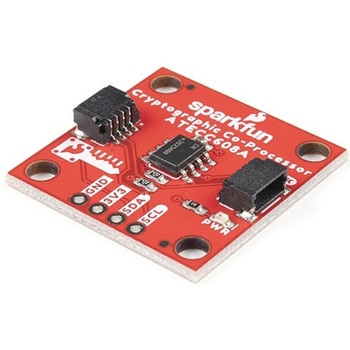
SparkFun Cryptographic Co-Processor Breakout - ATECC608A Qwiic
SPARKFUN¥1,498税込¥1,6481個33日以内出荷。Description。Product Restrictions:To access certain features of the ATECC608A, users will need to contact Microchip and sign an NDA contract to obtain the complete datasheet. Due to the required NDA - technical support, an Arduino library, and hookup guide are not provided for users on this product.。The SparkFun ATECC608A Cryptographic Co-processor Breakout allows you to add strong security to your IoT node, edge device, or embedded system. This includes。a。symmetric。authentication,。symmetric。AES-128 encryption/decryption, and much more. As stated above, the ATECC608A has limited Arduino support and the complete datasheet is under NDA with Microchip.。This breakout board includes two Qwiic ports for plug and play functionality. Utilizing our handy Qwiic system, no soldering is required to connect it to the rest of your system. However, we still have broken out 0.1"-spaced pins in case you prefer to use a breadboard. The ATECC608A chip is capable of many cryptographic processes, including, but not limited to:Creating and securely storing unique asymmetric key pairs based on Elliptic Curve Cryptography(FIPS186-3).。AES-128:Encrypt/Decrypt, Galois Field Multiply for GCM。Creating and verifying 64-byte digital signatures(from 32-bytes of message data).。Creating a shared secret key on a public channel via Elliptic Curve Diffie-Hellman Algorithm.。SHA-256 HMAC Hash including off-chip context save/restore。Internal high quality FIPS random number generator.。Embedded in the chip is a 10Kb EEPROM array that can be used for storing keys, certificates, data, consumption logging, and security configurations. Access to the sections of memory can then be restricted and the configuration locked to prevent changes. Each ATECC608A Breakout ships with a guaranteed unique 72-bit serial number and includes several security features to prevent physical attacks on the device itself, or logical attacks on the data transmitted between the device.。A summary datasheet for the ATECC608A is available here. The full datasheet is under NDA with Microchip. You will need to contact them for access to the entire datasheet. Meanwhile, the ArduinoATECCX08 Library currently only supports the ATECC608A with SAMD21 Arduino boards.。We do have much more support for the ATECC508A version of this chip. Please check out our ATECC508A Hookup Guide and Arduino Library(which includes six examples). This will get you familiar with the basics of elliptic curve cryptography and signing/verifying data with the ATECC508A version of the chip.。Note:The I2C address of the ATECC608A is 0x60 and is software-configurable to any address. A multiplexer/Mux is required to communicate to multiple ATECC608A sensors at the default address when on a single bus. If you need to use more than one ATECC608A sensor at the default address, consider using the Qwiic Mux Breakout.。Note:The ATECC608A can be only configured once before it is。PERMANENTLY。locked。. It is advisable that users purchase multiple boards in order to use other configurations and explore the advanced functions of the ATECC608A.。Additionally, this board。IS。capable of encrypting and decrypting data. However, to access these additional features, you will need to contact Microchip and sign an NDA contract to obtain the complete datasheet.。It is recommended that an SparkFun RedBoard Turbo - SAMD21 Development Board is used with this product due to the buffer size required on the I2C bus.。The SparkFun Qwiic Connect System is an ecosystem of I2C sensors, actuators, shields and cables that make prototyping faster and less prone to error. All Qwiic-enabled boards use a common 1mm pitch, 4-pin JST connector. This reduces the amount of required PCB space, and polarized connections mean you can't hook it up wrong.。。Features。Operating Voltage:2.0V-5.5V(。Default on Qwiic System:3.3V。)。Active Current Draw(for ATECC608A):16 mA。Sleep Current(for ATECC608A):<150 nA。Guaranteed Unique 72-bit Serial Number。10 Kb EEPROM Memory for Keys, Certificates, and Data。Storage for up to 16 Keys。256-bit Key Length。Internal High-Quality FIPS Random Number Generator(RNG)。Configurable I2C Address(7-bit):0x60(。Default。)アズワン品番67-0423-59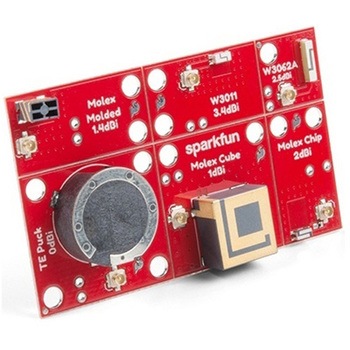
SparkFun GNSS Chip Antenna Evaluation Board
SPARKFUN取扱い終了Description。What is the best chip antenna for your GNSS project? There are tons to choose from, but finding the right one might be tricky so here's a board that helps make deciding easier. The SparkFun GNSS Chip Antenna Evaluation Board makes it easy to test out various sized GPS antennas and geometries. Six different chip antennas have been populated on this board, each with a U.FL connector to attach your chip to the antenna! We've even v-scored the board so you can snap the six antenna's apart and just have the one you need.。If you aren't picky about your antenna and/or each of the antennas work well for your applications, you will get six antennas to use in various project. Since these are GNSS antennas, they will work with GPS as well as GLONASS, Galileo, BeiDou, and other worldwide systems.。Get Started With the SparkFun GNSS Evaluation Board Guideアズワン品番67-0423-79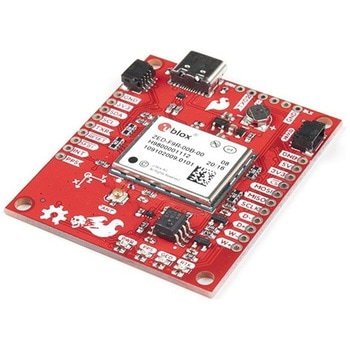
SparkFun GPS-RTK Dead Reckoning Breakout - ZED-F9R Qwiic
SPARKFUN取扱い終了Description。The SparkFun ZED-F9R GPS Breakout is a high precision, sensor fusion GPS board with equally impressive configuration options and takes advantage of u-blox's Automotive Dead Reckoning(ADR)technology. The ZED-F9R module provides a highly aアズワン品番67-0423-83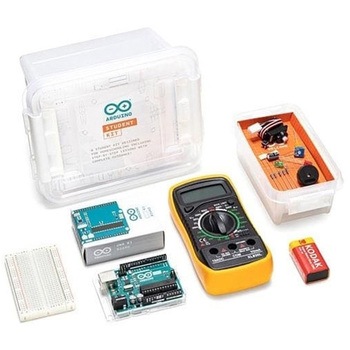
Arduino AKX00025 Student Kit
SPARKFUN取扱い終了Description。Arduino AKX00025 Student Kit is a programming and electronics kit designed for remote learning that includes step-by-step lessons and complete guidance. This student kit offers lessons that are fun and engaging with real-world topics and improves problem-solving and critical thinking skills. The AKX00025 kit is affordable and is used in learning digital logic and electronics topics like the current, voltage, and logic programming. This kit includes 9 lessons and 2 open-ended projects and offers different solutions to develop projects, inviting innovation, creativity, and problem-solving thinking.。Features。Affordable。Individual use。Quick and easy to get started with step-by-step lessons。No experience required for educators, parents, and children。Learn electronics step-by-step, with no prior coding or electronics experience required。Suitable for ages 11 to 14。9 lessons and 2 open-ended projects。Lessons are fun and engaging with real-world topics。Improve problem-solving and critical thinking skills。Learn about current, voltage, digital logic, and programmingアズワン品番67-0424-65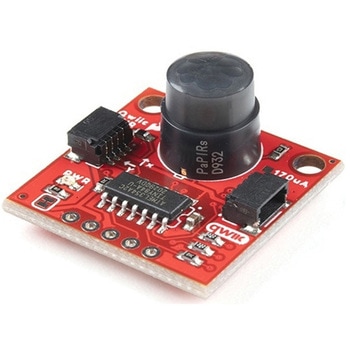
SparkFun Qwiic PIR - 1uA EKMB1107112
SPARKFUN取扱い終了Description。Passive Infrared(PIR)sensors are great for detecting motion in a small area around the sensor. The 1μA SparkFun EKMB1107112 Qwiic PIR uses an EKM-series PIR sensor from Panasonic(R)paired with an ATTiny84 to interact with it using I2C with the Qwiic system. The EKMB-series PIR sensors are optimized for small movements to offer motion-sensing options for battery powered applications due to the low standby current draw of the sensor(1μA).。PIR sensors do not return specific distance data but instead monitor for IR light coming from objects in their field of view and will activate their signal when motion is detected in their sensing area, making them perfect for applications such as turning devices on automatically when motion is detected. Applications include home and building automation for energy saving, automated on/off lighting control, security, appliances, and IoT.。Panasonic's low-profile PIR motion sensors(10.9mm versus standard 14.4mm height offer space savings for constrained designs)consist of a lens to create various detection zones, an optical filter to block non-infrared light, pyroelectric sensing elements, electromagnetic shielding to all circuitry, and an impedance converter to get an electrical signal. This PIR sensor offers digital output across 32 zones at 5m detection distance with 90°×90° detection area.。Note:The sensitivity of passive infrared sensors is influenced by environmental conditions, so a performance evaluation test under representative conditions is recommended.。The SparkFun Qwiic Connect System is an ecosystem of I2C sensors, actuators, shields and cables that make prototyping faster and less prone to error. All Qwiic-enabled boards use a common 1mm pitch, 4-pin JST connector. This reduces the amount of required PCB space, and polarized connections mean you can't hook it up wrong.。Get Started with the Qwiic PIR Hookup Guide。Features。Default I2C address 0x12(Alternate 0x13 selectable by solder jumper)。2x Qwiic connectors。2x3 header on the back of the board for reprogramming the ATTiny84。Lens diameter - 10.4mm。Lens Height - 10.9mm。1μA standby current consumption。5m detection distance。90°×90°(±45°)detection areaアズワン品番67-0427-46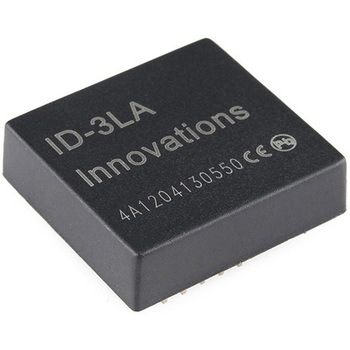
RFID Reader ID-3LA 125 kHz
SPARKFUN取扱い終了Description。RFID(radio-frequency identification)is the wireless non-contact use of radio-frequency electromagnetic fields, for the purposes of identifying and tracking tags attached to objects. This is the ID-3LA, a very simple to use RFID reader module from ID Innovations. The only holdups are the 2mm pin spacing and you will need an external antenna. Power the module, hold up a 125kHz card, and get a serial string output containing the unique ID of the card.。Note:The new ID-3LA is essentially the same as the ID-2, but has a lower voltage input.。Features。2.8~5V supply。125kHz read frequency。EM4001 64-bit RFID tag compatible。9600bps TTL and RS232 output。Magnetic stripe emulation output。19x21mmアズワン品番67-0430-32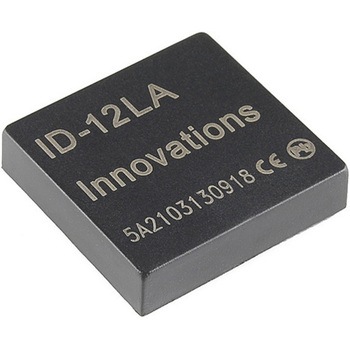
RFID Reader ID-12LA 125 kHz
SPARKFUN取扱い終了Description。RFID(radio-frequency identification)is the wireless non-contact use of radio-frequency electromagnetic fields, for the purposes of identifying and tracking tags attached to objects. This is the ID-12LA, a very simple to use RFID reader module from ID Innovations. With a built in antenna, the only holdup is the 2mm pin spacing. Power the module, hold up a 125kHz card, and get a serial string output containing the unique ID of the card.。Note:The new ID-12LA is essentially the same as the ID-12, but has a lower voltage input.。Features。2.8 - 5V supply。125kHz read frequency。EM4001 64-bit RFID tag compatible。9600bps TTL and RS232 output。Magnetic stripe emulation output。120mm read range。25x26mmアズワン品番67-0430-30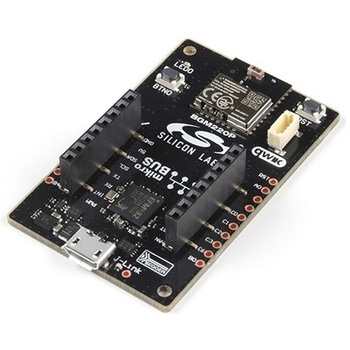
Silicon Labs BGM220 Explorer Kit
SPARKFUN取扱い終了Description。The BGM220 Explorer Kit from Silicon Labs is an ultra-low cost, small form factor development and evaluation platform for the BGM220P Bluetooth(R)Module. The kit includes a mikroBUS(TM)socket and Qwiic connector, allowing users to add features to the kit with a large selection of off-the-shelf boards.。Programming the BGM220 Explorer Kit is easily done using a USB Micro-B cable and the on-board J-Link debugger. A USB virtual COM port provides a serial connection to the target application, and the Packet Trace Interface(PTI)offers invaluable debug information about transmitted and received packets in wireless links. The BGM220 Explorer Kit is supported in Simplicity Studio(TM)and a Board Support Package(BSP)is provided to give application developers a flying start.。Connecting external hardware to the BGM220 Explorer Kit can be done using the 20 breakout pads which present peripherals from the BGM220P Wireless Gecko such as I2C, SPI, UART and GPIOs. The mikroBUS socket allows inserting mikroBUS add-on boards which interface with the BGM220P through SPI, UART or I2C. The Qwiic connector can be used to connect hardware from the Qwiic Connect System through I2C.。Features。Small Form Factor Kit。EXP compatible breakouts。Target device。BGM220PC22HNA。Secure Bluetooth 5.2 module。76.8 MHz, ARM Cortex-M33 with 512 kB of flash and 32 kB RAM。Bluetooth 5.2 Radio with supported for direction finding and LE coded PHY38.4 MHz HFXO crystal。32.768 kHz LFXO crystal。2.4 GHz matching network and a chip antenna。On-board Board controller。J-Link debugger。SWD physical layer。Packet trace over UART/async protocol。Virtual COM with hardware flow control。USB Micro-B connector for debug connection。User interface features。1x button(with EM2 wake-up)。1x LED。Mini Simplicity Debug Connector(SLSDA001A compatible)with access to。AEM。PTI。VCOM。SWD。Third-party add-on connectors。mikroBus socket。Qwiic connectorアズワン品番67-0423-45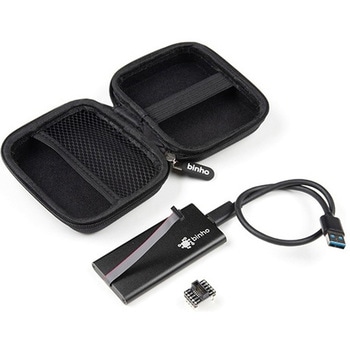
Binho Nova Multi-Protocol USB Host Adapter
SPARKFUN取扱い終了。Description。The Binho Nova Multi-Protocol USB Host Adapter allows one to interface their computer directly to hardware circuits. This device is powered by the USB connection to the host PC and is also able to provide downstream power to test circuits.。The Binho Nova Multi-Protocol USB Host Adapter features 5 signal pins, one×3v3 pin, one×VUSB pin, and three×GND pins on its 10pin wire harness. The wire harness terminates with a female 1.27mm 2x5 IDC connector. In IO Mode, the five signal pins can be used for varying functions such as Digital Input, Digital Output, PWM Output, Digital Interrupt(on rising edge, falling edge, or change), Analog Input, or Analog Output.。Additionally, the host adapter is able to utilize these pins to communicate on several digital buses:I2C, SPI, UART,(Dallas)1-Wire, and(Atmel)Single-Wire Interface. While in these modes of operation, remaining available pins can be assigned to other related or unrelated purposes such as gpio, interrupts, chip selects, PWM signals, or analog input or outputs.。The Binho Nova Multi-Protocol USB Host Adapter is ideal for manual testing during firmware development and debugging as well as a perfect way to automate hardware testing and validation. A common use-case of this product in production environments is for EEPROM/Flash Memory programming along with functional testing activities.。Features。Support for SPI @ 12MHz max clock。Support for I2C @ 3.4MHz max clock。Support for UART @ 1000000 max baud。Support for Dallas 1-Wire。Support for Atmel Single-Wire Interface。Provides 3v3 and VUSB power rails。1×DAC Output, 5×ADC Inputs。GPIO / Interrupt / PWM Support。Programmable RGB Status LED。Field-Upgradeable Device Firmware。Cross-platform Support for Windows,Mac, Linux。Robust, low-profile AluminumEnclosure。USB Type-C Connectorアズワン品番67-0423-03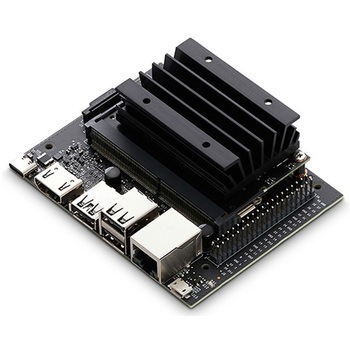
NVIDIA Jetson Nano 2GB Developer Kit without Wireless Adaptor
SPARKFUN取扱い終了Description。Discover the power of AI and robotics with NVIDIA(R)Jetson Nano(TM)2GB Developer Kit with a new lower sticker price aiming to deliver the performance to run modern AI workloads using the entire GPU-accelerated NVIDIA software stack in a small form factor to even more educators, students, developers, enthusiasts.。Learning by doing is key for anyone new to AI and robotics, and the Jetson Nano 2GB Developer Kit is ideal for hands-on teaching and learning. Unlike online-only learning, you'll see your work on the developer kit perceive and interact with the world around you in real time. In addition to the free tutorials offered by NVIDIA, thousands of Jetson Nano developers actively contribute videos, how-tos, open-source projects, AI frameworks, and models for applications like image classification, object detection, segmentation, and speech processing. The developer kit can be powered by USB-C 5V 3A and comes with extensive I/Os, including GPIO, USB-A(3.0 2.0), USB-Micro-B, and CSI-2 camera connector. This makes it simple for developers to connect a diverse set of new sensors to enable a variety of AI applications from introductory "Hello AI World," to robotics projects such asthe open-source NVIDIA JetBot AI robot platform.。All these resources are enabled by NVIDIA JetPack(TM), which brings to each Jetson developer the same CUDA-XTM software and tools used by professionals around the world. JetPack includes a familiar Linux environment and simplifies the development process with support for cloud-native technologies such as containerization and orchestration. There's no better way to start. The same JetPack SDK is used across the entire NVIDIA Jetson family of products and is fully compatible with NVIDIA's AI platform for training and deploying AI software. This proven software stack reduces complexity and overall effort for developers.。Features。GPU 128-core Maxwell(TM)GPU。CPU Quad-core ARM A57 @1.43 GHz。Memory 2 GB 64-bit LPDDR4 | 25.6 GB/s。10/100/1000BASE-T Ethernet。Storage microSD(not included)。Video Encode 4Kp30| 4x 1080p30| 9x 720p30(H.264/H.265)。Video Decoder4Kp60| 2x 4Kp30| 8x 1080p30| 18x 720p30|(H.264/H.265)。Gigabit Ethernet。1x MIPI-CSI camera connector。HDMI。USB 3.0 Type A。USB 2.0 Type A。USB 2.0 Micro-B。USB C - 5V 3A power only。40-pin header:GPIOs, I2C, I2S, SPI, UART。12-pin header:Power and related signals, UART。4-pin Fan header。Dimensions:100mm×80mm×29mmアズワン品番67-0423-32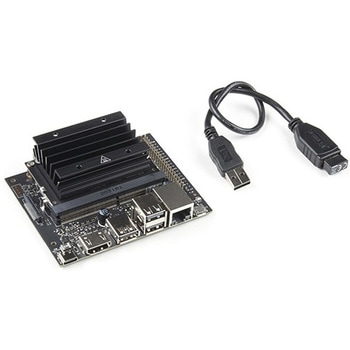
NVIDIA Jetson Nano 2GB Developer Kit
SPARKFUN取扱い終了Description。Discover the power of AI and robotics with NVIDIA(R)Jetson Nano(TM)2GB Developer Kit with a more economical price aiming to deliver the performance to run modern AI workloads using the entire GPU-accelerated NVIDIA software stack in a small form factor to even more educators, students, developers, enthusiasts.。Learning by doing is key for anyone new to AI and robotics, and the Jetson Nano 2GB Developer Kit is ideal for hands-on teaching and learning. Unlike online-only learning, you'll see your work on the developer kit perceive and interact with the world around you in real time. In addition to the free tutorials offered by NVIDIA, thousands of Jetson Nano developers actively contribute videos, how-tos, open-source projects, AI frameworks, and models for applications like image classification, object detection, segmentation, and speech processing. The developer kit can be powered by USB-C 5V 3A and comes with extensive I/Os, including GPIO, USB-A(3.0 2.0), USB-Micro-B, and CSI-2 camera connector. This makes it simple for developers to connect a diverse set of new sensors to enable a variety of AI applications from introductory "Hello AI World," to robotics projects such asthe open-source NVIDIA JetBot AI robot platform.。All these resources are enabled by NVIDIA JetPack(TM), which brings to each Jetson developer the same CUDA-XTM software and tools used by professionals around the world. JetPack includes a familiar Linux environment and simplifies the development process with support for cloud-native technologies such as containerization and orchestration. There's no better way to start. The same JetPack SDK is used across the entire NVIDIA Jetson family of products and is fully compatible with NVIDIA's AI platform for training and deploying AI software. This proven software stack reduces complexity and overall effort for developers.。Features。GPU 128-core Maxwell(TM)GPU。CPU Quad-core ARM A57 @1.43 GHz。Memory 2 GB 64-bit LPDDR4 | 25.6 GB/s。10/100/1000BASE-T Ethernet。Storage microSD(not included)。Video Encode 4Kp30| 4x 1080p30| 9x 720p30(H.264/H.265)。Video Decoder4Kp60| 2x 4Kp30| 8x 1080p30| 18x 720p30|(H.264/H.265)。Gigabit Ethernet 802.11ac wireless。1x MIPI-CSI camera connector。HDMI。USB 3.0 Type A。USB 2.0 Type A。USB 2.0 Micro-B。USB C - 5V 3A power only。40-pin header:GPIOs, I2C, I2S, SPI, UART。12-pin header:Power and related signals, UART。4-pin Fan header。Dimensions:100mm×80mm×29mmアズワン品番67-0423-24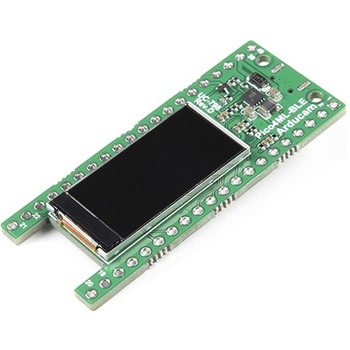
Arducam Pico4ML TinyML Dev Kit
SPARKFUN取扱い終了Description。The Pico4ML TinyML Dev Kit from Arducam is a single board system powered by Raspberry Pi's RP2040 microcontroller. It has the power to run all Tensorflow Lite Micro tiny machine learning examples. The board features a QVGA camera module with ultra-low power consumption, configurable 1-bit video data serial interface with video frame and line sync, and the monochrome sensor makes image processing an easy part for most machine vision applications.。The audio chip on the Pico4ML is capable of directly outputting PDM(Pulse-density modulation)signals, this integration allows the RP2040 to receive audio input. Motion tracking is also a built-in feature with a 2.5 mW low-power 9-axis IMU.。The small TFT display at the back of Pico4ML is a 160×80 LCD, it's connected to the board through the SPI interface, you can do a live preview of the camera, or display the results of any of the your ML models in real-time.。The Arducam Pico4ML is completely open-source, all its codes, design files, and schematics will be made available for anyone to use, rebuild or modify.。Features。Raspberry Pi RP2040 Microcontroller。ICM-20948 Inertial Measurement Unit(low power)。Mono channel microphone w/ direct PCM output。Buttons:Reset。Boot。Camera Module:HiMax HM01B0, Up to QVGA(320×240)。Screen:0.96 inch LCD SPI Display(160×80, ST7735)。Operating Voltage:3.3V。Current Draw。(standby):40mA。(running ML models):60mA。Input Voltage:VBUS:5V +/- 10%.。VSYS Max:5.5V。Dimensions:51 mm×21 mmアズワン品番67-0423-64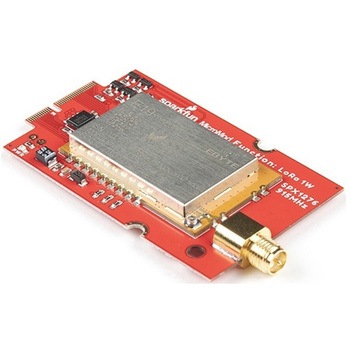
SparkFun MicroMod LoRa Function Board
SPARKFUN取扱い終了Description。The SparkFun MicroMod LoRa Function Board provides LoRA and LoRaWAN capabilities to your MicroMod project. It is intended to be used in conjunction with a MicroMod Processor Board and a MicroMod Main Board, which provides the electrical interface between a processor board and the Function Board(s).。The LoRa Function Board utilizes the 915M30S LoRa module from EBYTE, which is a 1W(30dBm)transceiver based around the SX1276 from Semtech. There is a robust edge mount RP-SMA connector for large LoRa(915MHz)antennas; with modification, a U.FL connector is also available. We've successfully tested a 12 miles line-of-sight transmission with this module。(test was performed under ideal conditions; individual user results may vary)。.。With the MicroMod standardization, users no longer need to cross-reference schematics with datasheets, while fumbling around with jumper wires. Simply, match up the function board's M.2 edge connector to the slot of the M.2 connector on the main board and secure the function board with screws.。Note:A MicroMod Processor, Main Board, and antenna are not included with this MicroMod LoRa Function Board. These parts will need to be purchased separately.。MicroMod is a modular interface ecosystem that connects a microcontroller "processor board" to various "carrier board" peripherals. Utilizing the M.2 standard, the MicroMod standard is designed to easily swap out processors on the fly. Pair a specialized carrier board for the project you need with your choice of compatible processor!。Get Started with the MicroMod LoRa Function Board Hookup Guide。Features。Board Features。M.2 MicroMod Edge Interface。Keyed Screw Slots。RP-SMA Antenna Connector。Configurable U.FL Antenna Connector。1W 915M30S LoRa Module Features。Based on SX1276 chipset from Semtech。Frequency Range:900 - 931MHz。Transmit Power:28.5 - 30dBm(max)。Modulation:LoRa, FSK, GFSK, MSK, GMSK, OOK。Data Rate:FSK:1.2 - 300kbps。LoRa:0.018 - 37.5kbps。Antenna Impedance:50Ω。MicroMod Peripherals Used。5V Power。I2C Bus(EEPROM)。SPI Bus。GPIO(7 pins)アズワン品番67-0429-89