






絞り込み
ブランド
- SPARKFUN
商品レビュー
- 以上(0)
- 以上(0)
- 以上(0)
- 以上(0)
価格
- 1,500-10,000円(1)
- 10,000-50,000円(1)
価格で絞り込む
出荷目安
- 当日
- 翌日以内
- 翌々日以内
- 3日以内
- 4日以内
当日・翌日以内・翌々日以内・3日以内・4日以内
その他
- 取扱い終了商品を除く
- 個人購入不可商品を除く
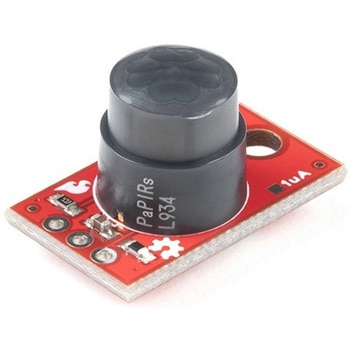 SparkFun PIR Breakout - 170uA EKMC4607112KSPARKFUN
¥4,998税込¥5,498
1個
33日以内出荷
DescriptionPassive Infrared(PIR)sensors are great for detecting motion in a small area around the sensor. The 170μA SparkFun EKMC4607112K PIR Breakout is a simple board equipped with an EKM-series PIR sensor from Panasonic(R). The EKM-series PIR sensors are optimized for small movements to offer motion-sensing options for continuously powered applications.PIR sensors do not return specific distance data but instead monitor for IR light coming from objects in their field of view and will activate their signal when motion is detected in their sensing area, making them perfect for applications such as turning devices on automatically when motion is detected. Applications include home and building automation for energy saving, automated on/off lighting control, security, appliances, and IoT.Panasonic's low-profile PIR motion sensors(10.9mm versus standard 14.4mm height offer space savings for constrained designs)consist of a lens to create various detection zones, an optical filter to block non-infrared light, pyroelectric sensing elements, electromagnetic shielding to all circuitry, and an impedance converter to get an electrical signal. This PIR sensor offers digital output across 32 zones at 5m detection distance with 90°×90° detection area.Note:The sensitivity of passive infrared sensors is influenced by environmental conditions, so a performance evaluation test under representative conditions is recommended.Get Started with the SparkFun PIR Breakout GuideFeaturesOperating Voltage:2.3-4.0V170 μAstandby current consumptionLens diameter - 10.4mmLens Height - 10.9mm5m detection distance90°×90°(±45°)detection area
アズワン品番67-0427-43
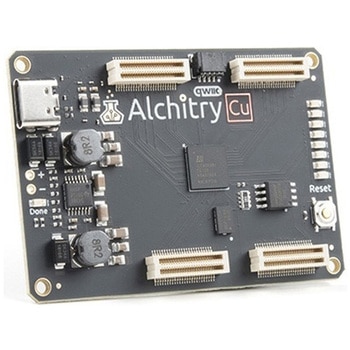 Alchitry Cu FPGA Development Board Lattice iCE40 HXSPARKFUN
¥14,980税込¥16,478
1個
33日以内出荷
DescriptionIf you are not needing a lot of power to start your FPGA adventure, or are looking for a more economical option, the Alchitry Cu FPGA Development Board might be the perfect option for you! The Alchitry Cu is a "lighter" FPGA version than the Alchitry Au but still offers something completely unique. FPGAs, or Field-Programmable Gate Arrays, are an advanced development board type for engineers and hobbyists alike to experience the next step in programming with electronics. The Cu truly exemplifies the trend of more affordable and increasingly powerful FPGA boards arriving each year. This board is a fantastic starting point into the world of FPGAs and the heart of your next project. Finally, now that this board is built by SparkFun, we added a Qwiic connector for easy I2C integration!The Alchitry Cu uses the Lattice iCE40 HX FPGA with 7680 logic cells and is supported by the open source tool chain Project IceStorm. The Cu possesses 79 IO pins with eight general purpose LEDs; a 100MHz on-board clock that can be manipulated internally by the FPGA; a USB-C connector to configure and power the board; and a USB to serial interface for data transfer.By adding stackable expansion boards similar to shields or HATs called "Elements," the Alchitry Cu is able to expand its own hardware capabilities by adding prototyping spaces, buttons, LEDs, and more!The SparkFun Qwiic Connect System is an ecosystem of I2C sensors, actuators, shields and cables that make prototyping faster and less prone to error. All Qwiic-enabled boards use a common 1mm pitch, 4-pin JST connector. This reduces the amount of required PCB space, and polarized connections mean you can't hook it up wrong.Get Started with our Learning FPGA TutorialsFeaturesLattice iCE40-HX8K FPGA - 7680 logic elements79 IO pins(3.3V logic level)USB-C to configure and power the boardEight general purpose LEDsOne button(typically used as a reset)100MHz on-board clock(can be multiplied internally by the FPGA)Powered with 5V through USB-C port, 0.1" holes, or headersUSB to serial interface for data transfer(up to 12Mbaud)Qwiic ConnectorDimensions of 65mm×45mmExamplesFirst FPGA Project - Getting Fancy with PWMExternal IO and Metastability
アズワン品番67-0423-08
『オフィスサプライ』には他にこんなカテゴリがあります

![ゲゲゲの鬼太郎スティックシャボン アーテック[学校教材・教育玩具]](https://jp.images-monotaro.com/Monotaro3/pi/middle/mono69336596-251219-02.jpg "ゲゲゲの鬼太郎スティックシャボン アーテック[学校教材・教育玩具]")
![EVAブロックセット アーテック[学校教材・教育玩具]](https://jp.images-monotaro.com/Monotaro3/pi/middle/mono69336228-251219-02.jpg "EVAブロックセット アーテック[学校教材・教育玩具]")
![クリスマススプリング アーテック[学校教材・教育玩具]](https://jp.images-monotaro.com/Monotaro3/pi/middle/mono69335501-251219-02.jpg "クリスマススプリング アーテック[学校教材・教育玩具]")
![スペースキーホルダー アーテック[学校教材・教育玩具]](https://jp.images-monotaro.com/Monotaro3/pi/middle/mono69335921-251219-02.jpg "スペースキーホルダー アーテック[学校教材・教育玩具]")
![くるくるさん アーテック[学校教材・教育玩具]](https://jp.images-monotaro.com/Monotaro3/pi/middle/mono69335711-251219-02.jpg "くるくるさん アーテック[学校教材・教育玩具]")
![ノリノリひよこ アーテック[学校教材・教育玩具]](https://jp.images-monotaro.com/Monotaro3/pi/middle/mono69335589-251219-02.jpg "ノリノリひよこ アーテック[学校教材・教育玩具]")
![パクっと!ワニさん アーテック[学校教材・教育玩具]](https://jp.images-monotaro.com/Monotaro3/pi/middle/mono69335607-251219-02.jpg "パクっと!ワニさん アーテック[学校教材・教育玩具]")
![ドミノパーク アーテック[学校教材・教育玩具]](https://jp.images-monotaro.com/Monotaro3/pi/middle/mono69336587-251219-02.jpg "ドミノパーク アーテック[学校教材・教育玩具]")
![トナカイさんぜんまい アーテック[学校教材・教育玩具]](https://jp.images-monotaro.com/Monotaro3/pi/middle/mono69335528-251219-02.jpg "トナカイさんぜんまい アーテック[学校教材・教育玩具]")
![ジンジャーブレッドマンぜんまい アーテック[学校教材・教育玩具]](https://jp.images-monotaro.com/Monotaro3/pi/middle/mono69335537-251219-02.jpg "ジンジャーブレッドマンぜんまい アーテック[学校教材・教育玩具]")
![ぐるぐるスパイラル アーテック[学校教材・教育玩具]](https://jp.images-monotaro.com/Monotaro3/pi/middle/mono69335555-251219-02.jpg "ぐるぐるスパイラル アーテック[学校教材・教育玩具]")
![サイコロプッシュポップ アーテック[学校教材・教育玩具]](https://jp.images-monotaro.com/Monotaro3/pi/middle/mono69335695-251219-02.jpg "サイコロプッシュポップ アーテック[学校教材・教育玩具]")
![ウォーターゲーム ダイナソー アーテック[学校教材・教育玩具]](https://jp.images-monotaro.com/Monotaro3/pi/middle/mono69335519-251219-02.jpg "ウォーターゲーム ダイナソー アーテック[学校教材・教育玩具]")
![カラフルキューブめいろ アーテック[学校教材・教育玩具]](https://jp.images-monotaro.com/Monotaro3/pi/middle/mono69335406-251219-02.jpg "カラフルキューブめいろ アーテック[学校教材・教育玩具]")
![お水でおえかきマット ウォーターカーニバル A4 アーテック[学校教材・教育玩具]](https://jp.images-monotaro.com/Monotaro3/pi/middle/mono69336395-251219-02.jpg "お水でおえかきマット ウォーターカーニバル A4 アーテック[学校教材・教育玩具]")